- Details
- By Chez Oxendine
- Gaming
A federal judge in Wisconsin has allowed the Ho-Chunk Nation to move forward with a lawsuit challenging whether online sports prediction markets offered by Kalshi amount to illegal sports betting on tribal lands under the Indian Gaming Regulatory Act.
The May 11 ruling could become an early test of whether federally regulated “event contracts” tied to sports outcomes qualify as class III gaming under IGRA. The case could also have implications for tribal gaming exclusivity as prediction market companies expand nationwide access to sports wagering-style products.
The dispute comes as tribal gaming groups and tribal leaders nationwide are increasingly warning that federally regulated prediction markets could undermine tribal-state gaming compacts and redirect gaming revenue away from tribal governments.
The Ho-Chunk Nation sued Kalshi and its partner Robinhood in August 2025, arguing the companies are running unlicensed sports betting through binary “event contracts” tied to real-world sporting events. The tribe says those contracts can be accessed by anyone physically located on its lands. In its complaint, the Nation alleged that Kalshi’s sports contracts “amount to unlawful gaming being offered and advertised on the Nation’s tribal lands in violation of the Indian Gaming Regulatory Act.”
Judge William M. Conley ruled that Ho-Chunk Nation had shown a "likelihood of success" on key IGRA claims and could proceed to discovery. He rejected Kalshi’s argument that tribes cannot sue private companies under the statute and found that the Nation’s compact with Wisconsin limits class III gaming to the tribe. He also denied the Nation’s request for a preliminary injunction, writing that the tribe had not shown irreparable harm despite a likelihood of success on the merits. Conley also dismissed separate racketeering claims brought under the federal Racketeer Influenced and Corrupt Organizations Act.
“The Ho‑Chunk Nation has consistently maintained that tribal governments retain the sovereign authority to regulate gaming within our jurisdiction,” Ho-Chunk President Jon Greendeer said in a statement. “This case is larger than one tribe or one company. It concerns the future of tribal regulatory authority in the digital age and the continued strength of IGRA as a cornerstone of tribal self-governance and economic self-determination.”
IGRA classifies sports betting as class III gaming, a category that in Wisconsin can only be offered under a tribal-state compact. Conley pointed to federal regulations defining class III to include “any sports betting and pari‑mutuel wagering,” and noted that the Ho‑Chunk compact “explicitly prohibits ‘operation of any Class III gaming activities under this Compact’ by any other person or entity.”
The Nation’s own gaming ordinance reinforces that rule. It states that “privately owned gaming operations are prohibited within the jurisdiction of the Nation.”
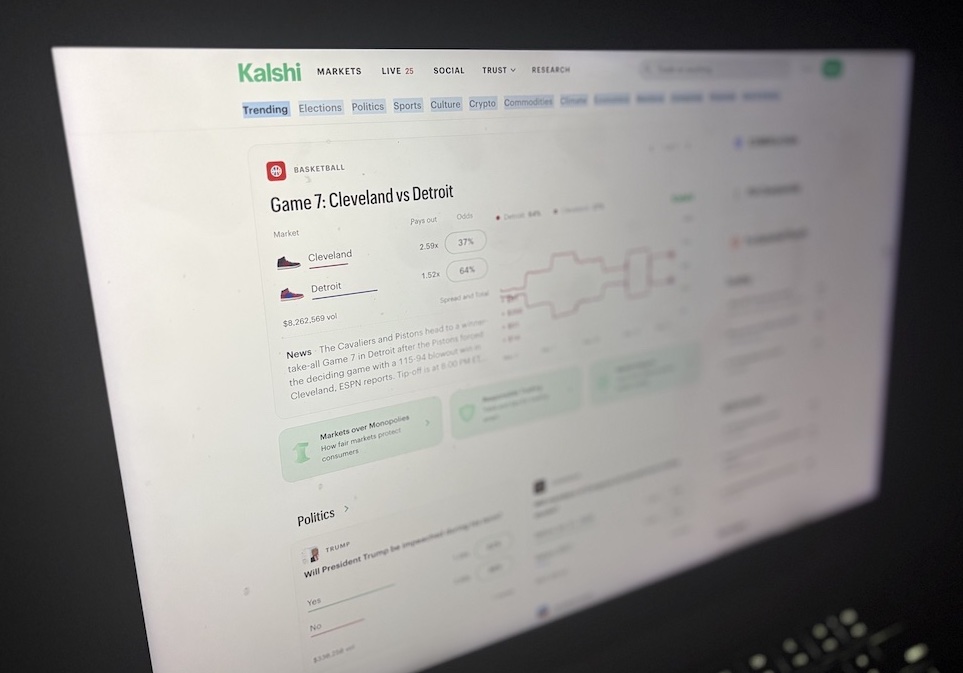
Kalshi operates as a federally regulated derivatives exchange offering event contracts tied to elections, weather, inflation and sports outcomes. Users buy contracts that pay out based on whether a specific event occurs.
The company has promoted its sports products on social media. One Instagram ad described Kalshi as “The First Nationwide Legal Sports Betting Platform,” while another claimed sports betting was “legal in all 50 states on Kalshi,” according to the Ho‑Chunk complaint.
The tribe argued those ads show Kalshi knows it is offering sports betting, not financial instruments. Conley noted that another federal court recently reached the same conclusion, writing that Kalshi’s sports contracts are “sports wagers and everyone who sees them knows it.”
Kalshi also argued that gaming only occurs where a company’s servers are located. Conley rejected that position.
“The ‘gaming activity’ is not where the action occurred to oversee the gaming, but the ‘gaming activity’ is (once again) the gambling,” he wrote.
As the Wisconsin case moves forward, Kalshi now faces a second lawsuit filed Tuesday in U.S. District Court in New Mexico by the Mescalero Apache Tribe, Pueblo of Isleta, Pueblo of Pojoaque and Pueblo of Sandia. The tribes allege that Kalshi is conducting unauthorized class III gaming on their lands in violation of their compacts and federally approved gaming ordinances.
The New Mexico tribes argue that Kalshi’s sports contracts meet IGRA’s definition of class III gaming because they involve chance, consideration and a prize. They point to compact provisions that authorize only the tribes themselves to conduct gaming on their lands and note that New Mexico does not permit internet gaming.
Sandia Pueblo Gov. Stuart Paisano said prediction markets threaten tribal gaming revenue and undermine tribal regulatory authority.
“The use of prediction markets for gambling purposes diverts essential revenue away from our governments, provides an end-run around regulation of gaming on our lands, and allows gaming by underage people,” Paisano said in a statement.
Under New Mexico tribal-state gaming compacts and federal law, patrons must be at least 21 years old to gamble at tribal casinos.
The complaint states that each tribe’s gaming ordinance bars third-party mobile sports betting on tribal land and requires that the tribe maintain the sole proprietary interest in gaming operations. It also notes that three of the four tribes can impose civil penalties of $5,000 per day, per violation for unauthorized gaming.
“Kalshi is operating Class III gaming activities on the Tribes’ respective Indian lands in violation of their respective tribal state gaming compacts and their respective federally approved gaming ordinances,” the complaint states.
The New Mexico case has been assigned to the U.S. District Court for the District of New Mexico and awaits initial scheduling orders.
Tribal Business News reached out to Kalshi for comment, but had not heard back when this story went live.
Brian Edwards contributed reporting.