- Details
- By Chez Oxendine
- Gaming
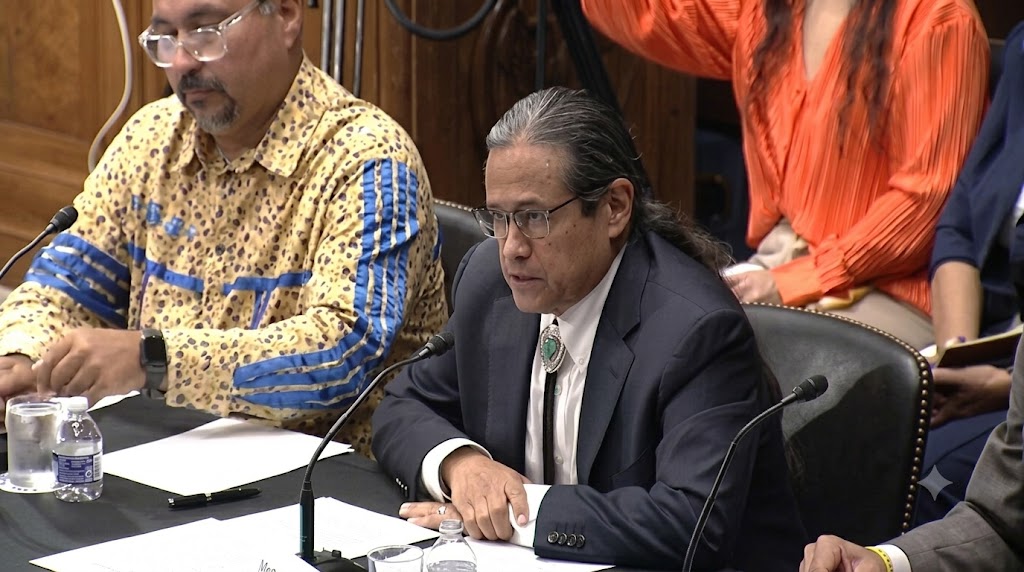
A Tuesday roundtable of the Senate Committee on Indian Affairs brought tribal leaders and federal lawmakers together for what participants called the most direct conversation yet about the rapid growth of prediction markets and their impact on tribal gaming and sovereignty.
Over the course of the discussion, tribal leaders, regulators and senators described a rapidly expanding industry that operates outside the Indian Gaming Regulatory Act, state gaming laws and tribal‑state compacts. They warned that prediction markets are functioning as sports betting without the consumer protections, regulatory oversight or jurisdictional boundaries that tribes and states have relied on for decades.
Lawmakers said the Commodity Futures Trading Commission’s approach to sports‑related event contracts has created legal uncertainty and opened the door for operators to evade gaming law. Sen. Lisa Murkowski (R‑Alaska) said the rise of prediction markets caught many policymakers off guard.
“Prediction markets have been integrated into everyday life, but they’re raising questions that go far beyond novelty,” Murkowski said. “I’ll be the first to admit that I was asleep at the switch when it came to what was going on with prediction markets.”
Tribal leaders told senators that prediction markets are offering sports wagers identical to regulated sportsbooks but without complying with tribal‑state compacts or federal gaming law. They said operators are avoiding age restrictions, responsible gaming programs and anti‑money‑laundering requirements by claiming their products are financial derivatives regulated by the CFTC.
Tehassi Hill, vice chairman of the Indian Gaming Association and chairman of the Oneida Nation, said the industry’s growth has outpaced regulatory oversight.
“Prediction markets have manipulated a weak regulatory agency to offer nationwide online sports gambling to kids as young as 18,” Hill said. “Every teenager with a smartphone can now lose their shirt without leaving their house or their dorm room.”
Several witnesses said the financial impact is already visible. Tribal gaming facilities track revenue daily, weekly, and monthly and leaders said same‑facility comparisons show declines that aggregate federal reports do not capture. They warned that prediction markets are drawing customers away from regulated tribal operations, especially in states where sports betting is illegal.
Mark Macarro, president of the National Congress of American Indians and chairman of the Pechanga Band of Indians, said federal revenue reports mask the underlying trend.
“The NIGC’s aggregate revenue report gets the causality backwards,” Macarro said. “Aggregate growth from new entrants doesn’t tell us anything meaningful about where prediction markets are eroding the customer base.”
Macarro said the clearest signs of erosion appear in year‑over‑year revenue comparisons at long‑operating casinos. He explained that while aggregate federal reports show overall growth driven by new entrants, existing properties are recording declines when measured against their own historical performance.
Macarro said daily, weekly and monthly tracking at individual facilities shows revenue softening in the periods immediately following the introduction of prediction markets in states where sports betting remains illegal. He said these internal comparisons reveal impacts that aggregate national totals obscure, particularly in markets with dozens of long‑standing operations.
Jamie Hummingbird, chairman of the National Tribal Gaming Commissioners and Regulators, said Congress must act before the problem becomes unmanageable and tribal gaming revenues are further impacted.
“If we do not take the action we need now to nip this in the bud, we are setting ourselves up for a much larger headache,” Hummingbird said. “We have the ability now to administer that ounce of prevention, but it must be done, and it must be done pretty quickly.”
The panel urged Congress to establish clear statutory definitions that prevent prediction markets from being treated as financial derivatives under the Commodity Exchange Act. Participants said Congress should explicitly affirm that sports‑related event contracts fall under gaming law, not commodities law, and that federal legislation must preserve the authority of states and tribal governments to regulate sports betting and casino‑style gaming.
Several witnesses said Congress should require the CFTC to halt approvals of sports‑related contracts until formal tribal consultation occurs and until minimum federal safety standards are in place.
They also called for closing loopholes in pending cryptocurrency and decentralized finance legislation. Witnesses warned that without precise language, prediction market operators could migrate onto blockchain platforms and continue offering unregulated sports wagering.
Hummingbird said Congress should adopt definitions that prevent decentralized finance exemptions from overriding tribal‑state compacts or federal gaming law, and should ensure that new financial market structures cannot be used to evade age restrictions, anti‑money‑laundering rules or responsible gaming protections.
Several senators said Congress should clarify federal law and preserve the authority of tribes and states to regulate sports wagering.
“All of us have real concern, especially about underage gambling, and then again you get into all these situations of insider trading and this and that,” Sen. John Boozman (R‑Ark.) said. “I think you’ve got a really good case to make. I don’t think enough people up here understand it yet.”