


- Details
- By Rod Wilson, Ph.D.
- Opinion | Op-Ed
Guest Opinion. The U.S. House’s unanimous passage of the Native American Entrepreneurial Opportunity Act is being treated, understandably, as a small-business story.
It is that. But it is also something larger.
It is a correction.
The bill would permanently establish the Small Business Administration’s Office of Native American Affairs, create an assistant administrator position focused on Native enterprise, and strengthen the agency’s work on tribal consultation, federal contracting, training, access to capital and supplier development.
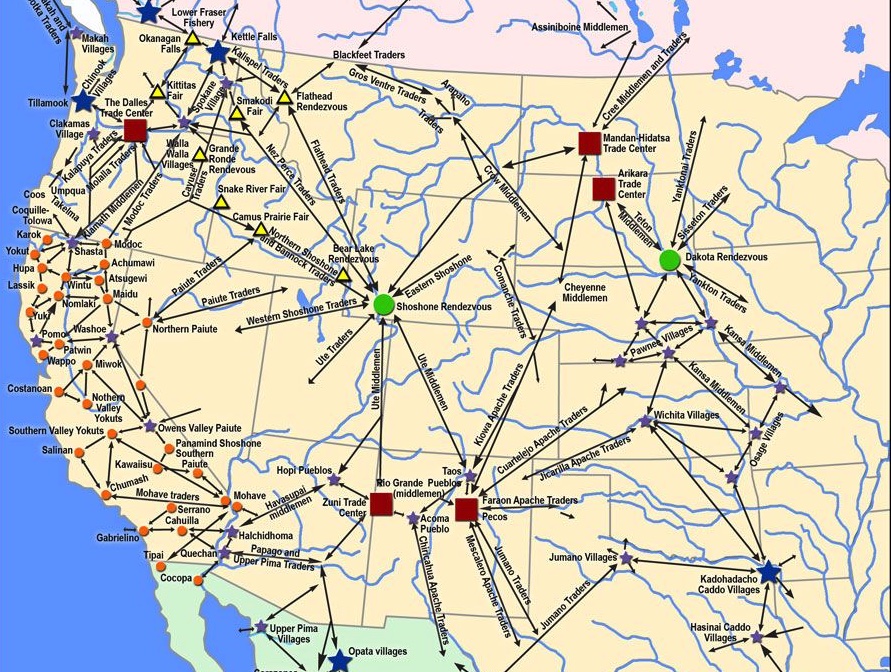
That matters because Native entrepreneurship is not new. It is older than the federal government, older than the American economy and older than the word “entrepreneur” itself.
Long before the United States had an economy of its own, Native nations were building trade networks, negotiating exchange, managing resources and creating value across communities. That was enterprise. It required intelligence, ambition, trust, discipline and leadership.
The mistake America often makes is assuming entrepreneurship only counts when it looks modern: a bank loan, a storefront, a pitch deck, a federal certification, or a procurement contract. But Native enterprise was never waiting to be invented by Washington. It was already here.
That is why this bill should be welcomed but not misunderstood.
The Native American Entrepreneurial Opportunity Act matters not because it creates Native entrepreneurship, but because it recognizes a fact America has too often overlooked: Native enterprise has always been part of this continent’s economic foundation.
The real issue is not whether Native entrepreneurs have ambition. They do.
The issue is whether federal systems are built to recognize and support that ambition.
For too many Native entrepreneurs and tribal enterprises, the barriers are not a shortage of ideas, work ethic or ability. The barriers are structural. Lenders and federal programs often fail to account for trust land, collateral limits, rural distance, tribal law and the unique realities of sovereign Native nations. Procurement systems can be slow, confusing, and difficult to navigate. Technical assistance too often treats Native business as a subset of minority business outreach rather than as part of the federal government’s broader responsibility to engage tribal nations on a government-to-government basis.
That distinction matters.
Native business is not just small business with a different label. It is tied to sovereignty, self-determination, community development and the long-term strength of tribal economies. It is also tied to functioning tribal governments. Tribal nations are not interest groups or cultural associations. They are governments responsible for their people, laws, services, infrastructure, land, resources, public safety, education, health care, housing and future planning. In that context, Native entrepreneurship is more than private enterprise. It is part of how communities build capacity, expand opportunity, and strengthen self-government.
When a Native-owned business grows, the impact can extend beyond one owner or one company. It can support families, create jobs, strengthen local economies, expand services, and build opportunities for the next generation. When a tribal enterprise wins a contract, that success can help support infrastructure, education, health care, housing, and other community priorities.
That is not charity. It is not a side program. It is not a diversity footnote. It is nation-building.
This is why codifying the SBA’s Office of Native American Affairs matters. Offices come and go. Priorities shift. Leadership changes. A permanent office with clear authority gives Native business development a stronger and more reliable place inside an agency that affects capital, contracting, counseling, training and business growth across the country.
Creating senior leadership inside the SBA also matters. Access without authority is usually just decoration. If Native entrepreneurs and tribal enterprises are going to receive meaningful support, there must be people inside the agency who have the responsibility and influence to move work forward.
But passage of this bill should not be treated as the finish line.
The real measure will be what changes on the ground.
Can more Native entrepreneurs access capital without running into outdated assumptions? Can more Native-owned firms compete for and win federal contracts? Can tribal enterprises receive support that respects sovereignty and local conditions? Can rural Native communities receive practical outreach rather than being expected to navigate through systems not designed for them? Can federal agencies move from good language to better results?
Those are the questions that matter.
Native entrepreneurs do not need the federal government to teach them ambition. They need federal systems that stop making ambition harder to act on.
America also needs a better understanding of Native enterprise itself. Too often, Native economies are discussed only through the narrow lens of need, poverty, gaming, grants, or federal programs. Those topics may be part of the conversation, but they are not the whole story.
The fuller story is one of intelligence, adaptation, risk, leadership and economic power.
Native entrepreneurs are building companies in construction, technology, energy, tourism, consulting, professional services, retail, finance, the arts and many other fields. Tribal enterprises are competing in complex markets while also carrying responsibilities most private companies do not carry: responsibility to people, place, culture and future generations.
That is not a weakness. It is a different and often deeper form of business leadership.
The Native American Entrepreneurial Opportunity Act deserves support because it points in the right direction. But the larger lesson is more important. America does not need to “discover” Native entrepreneurs.
They already exist.
The work now is to remove barriers, respect sovereignty, strengthen access, and recognize what has been true from the beginning: Native people were building economies on this continent long before the United States had an economy of its own.
The future of Native entrepreneurship is not a new chapter.
It is the continuation of an old one, finally being read correctly.
Rod Wilson, Ph.D., is a strategic advisor, author, and speaker who has worked with tribal governments and Native organizations for more than three decades. He serves in executive education and board leadership at the Drucker School of Management at Claremont Graduate University and is the author of The Native American Dream.