


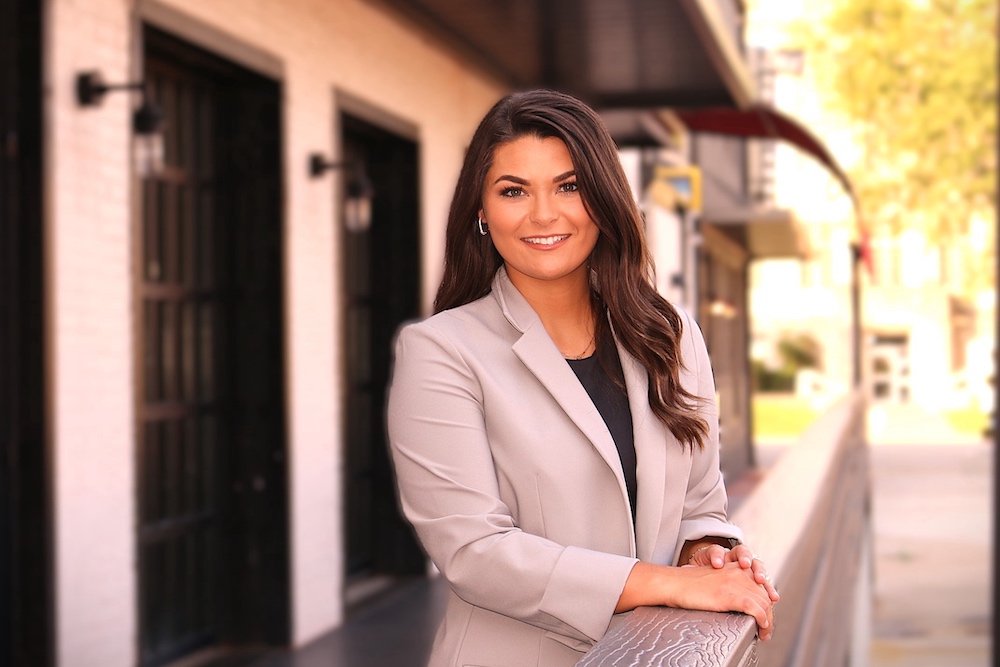
- Details
- By Jamie Miller, Special to Tribal Business News
- Real Estate
At just 18 years old, Kayla Palmer survived a car accident that left her with medical injuries doctors said would prevent her from ever having a career.
Defying those early expectations, Palmer graduated from college with plans to attend law school. A Cherokee Nation citizen, she began her career working for the Cherokee Nation Housing Authority, helping support affordable housing initiatives, before transitioning into a role as a litigation paralegal. Instead of finding fulfillment, she found burnout — and a growing realization that law school would delay, not accelerate, her ability to do meaningful work.
Construction offered a different route. By entering the industry alongside her husband, Palmer saw an opportunity to build something sooner — both professionally and for her community.
Today, she is the president and co-founder of Palmer Construction & Marine Company LLC, a Sallisaw, Okla.-based woman- and Cherokee-owned small business established in 2021. The company works in road and bridge construction, heavy civil projects and marine infrastructure.
Through construction, she found a way to connect people, strengthen communities, and create lasting impact through the projects she helps bring to life. This interview has been edited for clarity and brevity.
You originally planned to pursue law. What drew you toward professional services, and how did you ultimately find your way into construction?
I live on the Cherokee reservation. There are a lot of things that happened that helped me get to where I am now. But really the most defining moment was when I was 18. I had a brain bleed in my right frontal lobe from a car accident, and I was told I was going to be disabled and not have a future or a career. That motivated me to go against those odds.
I originally wanted to go to law school. After college, I had a job with Cherokee Nation Housing Authority as a rehab specialist and that is what opened up my eyes to the idea of doing work for the tribe. Then I went to work as a litigation paralegal after college. I became very unhappy, burned out and just drained, because I knew my purpose and realized I wasn’t going to be able to achieve it in any short amount of time if I went into law.
What does Palmer Construction & Marine Company do today, and what types of clients do you serve?
I am a general contractor. We do federal, state, tribal and Department of Transportation work, including road and bridge construction, heavy civil projects, crane operations and marine industry solutions such as boat and barge construction, lock and dam maintenance and structural repairs.
Is there a project you’re especially proud of — one that reflects why this work matters to you and your community?
The project I am proudest of, as far as what it does for community impact, is our softball field build. I played softball in college … that shaped my life forever. Knowing the impact that's going to have on young children and young women in their lives — that makes me the proudest. The space allows bonding, allows relationship building and teaches leadership.
What are the biggest challenges you see Native communities facing in construction and infrastructure right now?
The cost of construction and the cost of affordable housing are big challenges. That is not necessarily just Native communities, it's happening everywhere. Another issue is the Disadvantaged Business Enterprise (DBE) contracts are frozen through the state and federal government.
What’s your approach to hiring and developing Native professionals in a traditionally male-dominated industry? What should tribes or entrepreneurs look for?
What we look for at Palmer is people who actually have a vision — who see a long-term goal of where they want to be in 10 years or 15 years. We do not say “You have to have 20 years of experience.” If you're willing to learn, to take in and just grow and you're willing to listen and work hard, then that's what we look for here.
In Service is a new recurring series that highlights Native executives in professional services — law, banking, accounting, insurance, consulting and related fields — who work with tribes, tribal enterprises and Indigenous entrepreneurs. Know someone who should be featured? Contact [email protected].