


- Details
- By Brian Edwards and Chez Oxendine
- Economic Development
At the end of 2024, with the election decided and a new administration headed to Washington, we laid out four areas we expected would shape Indian Country’s economic story this year: artificial intelligence, agriculture policy, clean energy and access to capital. The choices weren’t speculative. They reflected active programs, bipartisan commitments and billions of dollars already in motion.
Then came the flood of executive orders, funding freezes, budget cuts and reductions in force that repeatedly disrupted what we expected to cover. Priorities changed.
Momentum gave way to friction. Announcements turned into audits. Project pipelines stalled under legal review. In sector after sector, the story shifted from what tribes planned to build to how they navigated uncertainty — regulatory, political and financial — while keeping economies moving.
As we look to 2026, the pressures shaping tribal economies will feel familiar to anyone who followed our reporting in 2025 — but the ground beneath them has shifted. What follows are the key storylines we’ll be tracking as those pressures play out in Indian Country in the year ahead.
What comes next for tribal energy — and who controls the path forward?
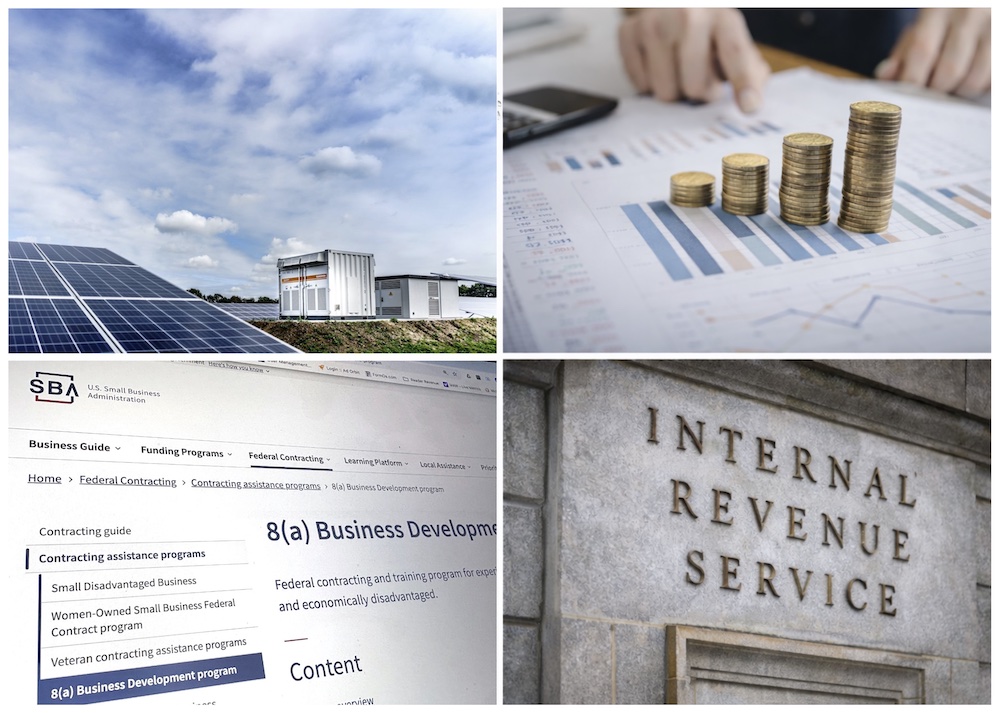
New priorities under the Trump administration have sharply altered the energy landscape, slowing — and in some cases halting — the clean energy transition in Indian Country. More than $2 billion in direct funding has been terminated, with additional support curtailed as key tax credits sunset and agencies retreat from earlier commitments. Tribes are now navigating rising energy costs while previously viable renewable projects strain under the loss of federal backing.
In 2026, Tribal Business News will track how tribes pursue energy sovereignty under these conditions. That includes renewed attention to oil, gas, coal, forestry, and biomass — particularly in regions where clean energy pathways have stalled and reliability concerns dominate. We’ll also follow how tribes adapt to the clean energy funding gap, whether by building internal technical capacity, leaning on nonprofit and state partners, or restructuring projects to survive without federal grants.
The question heading into 2026 is no longer whether clean energy is viable in Indian Country. It’s which energy strategies tribes can control — and finance — when federal priorities shift.
What comes next for tribal tax certainty — and does it change behavior?
After decades of uncertainty, the U.S. Department of the Treasury finalized two long-awaited tribal tax regulations in late 2025 — one clarifying the federal tax treatment of tribal general welfare programs, and another confirming the tax status of businesses wholly owned by tribes.
On paper, the rules remove ambiguity. In practice, their impact will depend on implementation.
The general welfare rule affirms that tribes — not the IRS — define what constitutes general welfare under tribal law, customs, and traditions, and that benefits may be funded with any revenue source, including gaming. The second rule confirms that tribally owned business entities chartered under tribal law are treated as part of the tribal government and are not subject to federal income tax, eliminating decades of uncertainty that increased borrowing costs and distorted deal structures.
In 2026, Tribal Business News will track whether tax certainty changes behavior on the ground. That includes whether tribes revisit defensive financing structures, restructure enterprise portfolios or expand housing, education and small-business programs previously constrained by tax risk. We’ll also watch how lenders, investors, and federal agencies respond — and whether certainty actually translates into lower capital costs.
Just as important is capacity. Implementation depends heavily on the IRS Office of Indian Tribal Governments, which saw staffing cuts in 2025. We’ll monitor whether enforcement is consistent, whether disputes are resolved predictably, and whether clarity finally replaces the uncertainty tribes were told to live with for decades.
What comes next for Native finance — and who controls the capital stack?
Native finance is no longer just about access. It’s about architecture.
Across Indian Country, Native-led financial institutions and tribal enterprises are raising capital in new ways, building balance sheets at unprecedented scale, and reshaping how projects are financed — from healthcare and housing to energy and manufacturing. Native CDFIs are increasingly stitching together capital from multiple sources — expanding philanthropic support where possible, testing newer tools like SSBCI, and pooling capital through participation loans and capital-weaving structures to reach scale as traditional federal funding grows less reliable.
That evolution became tangible in 2025, as tribes closed complex healthcare deals using tools long considered out of reach: taxable bond issuances, lease-back partnerships, and investment-grade credit ratings backed by tribal revenue systems. Different structures, same signal — tribes are increasingly willing to carry risk and set terms themselves.
That shift brings opportunity and exposure.
In 2026, Tribal Business News will track how Native finance institutions navigate growth and control. We’ll follow capital structures as they appear in major projects and partnerships, and report on how market discipline — rather than federal programs — is increasingly shaping tribal economic decisions.
What comes next for tribal federal contracting — and who sets the guardrails?
Federal contracting remains one of the most powerful economic engines in Indian Country.
In 2025, though, a sweeping audit of the SBA’s 8(a) Business Development Program forced thousands of firms to submit years of financial records on compressed timelines, raising the risk of suspension or removal from a program that generated more than $26 billion in federal awards last year. The audit unfolded amid shifting guidance and political pressure, exposing how vulnerable tribal enterprises can be when oversight intensifies suddenly.
That scrutiny escalated on Capitol Hill, as Sen. Joni Ernst called for a pause on new 8(a) sole-source awards and publicly named several Native-owned enterprises — claims those firms dispute as flawed and inaccurate. At the same time, the SBA’s Office of Native American Affairs was left without permanent leadership, weakening the institutional support structure during a period of heightened risk.
Layered onto regulatory and political pressure was a different reckoning: community accountability. The Prairie Band Potawatomi Nation’s decision to exit ICE-related contracting after citizen backlash highlighted a reality unique to tribal enterprises — federal contracts are not just commercial decisions, but political and cultural ones.
In 2026, Tribal Business News will track the fallout: audit outcomes, policy shifts, leadership changes at SBA, and how tribes recalibrate governance, compliance, and contract selection in a more contested federal contracting environment.
Other beats we’ll be tracking in 2026
Real estate and housing: Tribal housing enters 2026 under acute pressure, with long-standing shortages colliding with rising construction costs and federal instability. We’ll track NAHASDA reauthorization, modernization efforts and how tribes pursue workforce housing, modular construction and climate-resilient design amid stalled federal processes.
Gaming: Litigation will continue to shape tribal gaming, from land-into-trust disputes tied to major casino projects to legal battles over sweepstakes and event-based gaming platforms. We’ll follow how courts redraw the boundaries of tribal authority and how tribes adjust development strategies in response.
Agriculture: As federal priorities shift, tribal producers face renewed uncertainty in USDA programs, conservation funding, and credit access. We’ll report on Farm Bill developments, food sovereignty strategies, intertribal trade, and the growing role of Native finance in rebuilding agricultural infrastructure.
Small business: Indigenous small businesses remain a core economic driver in Indian Country, anchoring local economies, circulating capital on reservations, and supporting employment where larger enterprises and federal programs don’t always reach. In 2026, we’ll track how Native-owned small businesses navigate access to capital, procurement opportunities, rising costs, and regulatory shifts — and how tribes, Native lenders and support organizations adapt tools like SSBCI, CDFI financing and technical assistance to sustain growth at the community level.