- Details
- By Chez Oxendine
- Gaming
A fast-growing class of online prediction markets is colliding with tribal gaming sovereignty, raising alarms in Indian Country over what a recent Brookings Institution report by legal scholar Patrice Kunesh calls an “existential threat” to American Indian gaming.
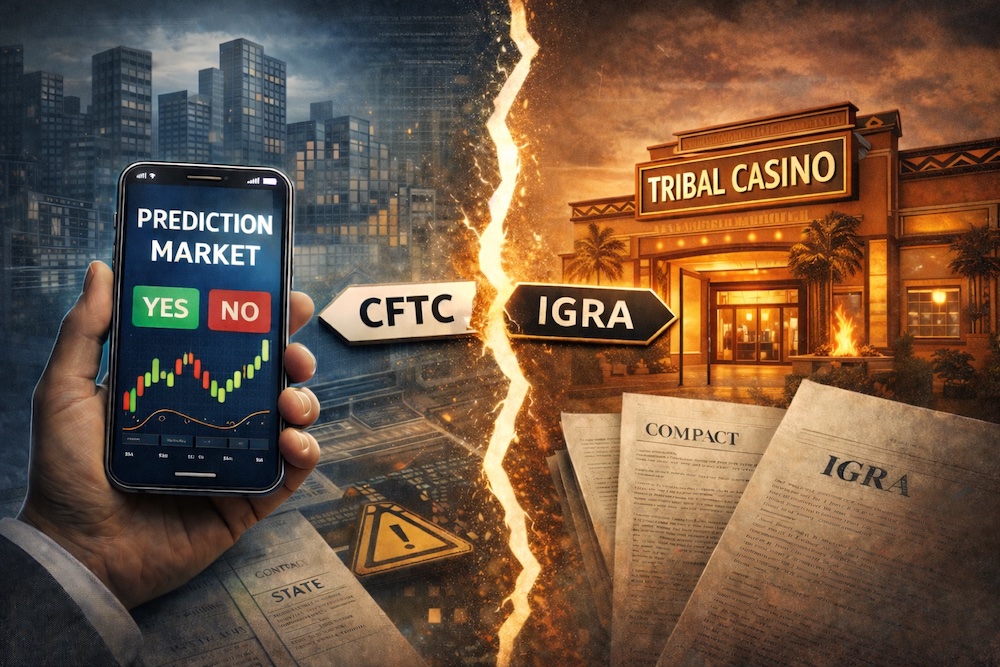
The conflict centers on whether prediction-market platforms are effectively offering sports betting while sidestepping the compacts, licensing requirements and regulatory oversight that govern tribal gaming under federal law. What began as a limited set of legal challenges has widened into a broader dispute over who has the authority to regulate online wagering — and where that authority stops.
The dispute sharpened in January, when a Massachusetts court moved to block the prediction-market app Kalshi from offering sports-related contracts in the state, finding that nearly 70% of its trading volume was tied to sports bets.
Kunesh, a visiting professor at the University of New Mexico School of Law and a senior fellow at the Brookings Institution, said the prediction market platforms are expanding rapidly by operating outside the regulatory framework that governs tribal gaming, aided by aggressive online marketing.
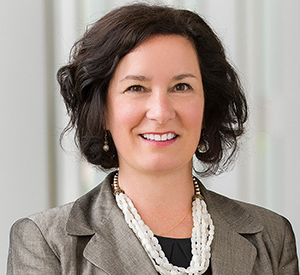 Patrice Kunesh, a visiting professor at the University of New Mexico School of Law and senior fellow at the Brookings Institution, warns that prediction markets operating outside tribal compacts could leave the Indian Gaming Regulatory Act “for naught.”Tribal mobile gaming is tightly regulated, including through geofencing that limits play based on a user’s physical location. Kalshi faces no comparable restrictions, allowing anyone over 18 to participate nationwide — a disparity Kunesh said gives the platform a structural advantage over tribal operators.
“[Kalshi is] ubiquitous, right, everywhere, all the time, no boundaries,” Kunesh told Tribal Business News. “The entire Indian Gaming Regulatory Act could be for naught if Kalshi is allowed to rough ride all over tribal compacts and regulations.”
Tribes have pursued digital gaming with uneven results, according to prior Tribal Business News reporting. In Florida, tribal mobile betting has faced multiple and often protracted legal challenges. Elsewhere, tribes have launched tightly regulated mobile offerings including a geofenced digital sportsbook operated by Navajo Nation Gaming Enterprises — with strong results.
In a Brookings Institution report, Kunesh warned that the lack of boundaries fueling the prediction market platforms’ growth also raises legal, economic and social‑welfare concerns. Lower age thresholds and frictionless access, she wrote, remove guard rails that tribal operations have in place to deter gambling addiction.
“It’s very addicting,” she told Tribal Business News. “Online gaming, e‑gaming, i‑gaming — it has this very addicting quality and basically no regulation around it.”
Tribes have responded with litigation. Sixteen tribes and the Indian Gaming Association filed an amicus brief in Connecticut supporting state regulators who ordered Kalshi, Robinhood and Crypto.com to halt unlicensed online gambling, according to Decrypt.
Decrypt reports that the tribes said Kalshi has acted as if “Congress gave it permission to enter Indian lands and siphon gaming revenues away from tribes over such tribes’ objections.”
Three California tribes also sued Kalshi in 2025, arguing its sports-linked contracts violate IGRA by functioning as unlicensed sports betting accessible on tribal lands. The case remains active after a judge declined to issue an injunction.
The tribes’ legal challenges turn on a conflict between IGRA and the Commodity Exchange Act, which governs derivatives — contracts whose value is tied to the outcome of an event and regulated by the Commodity Futures Trading Commission. If prediction-market wagers are treated as derivatives, they fall under the CFTC’s jurisdiction and largely outside IGRA and the reach of state and tribal regulators.
Tribes and states counter that the platforms function as sports betting and cannot bypass gaming laws by labeling wagers as financial contracts, a distinction they say has allowed the markets to expand without the licensing, age verification or consumer protections required of tribal and state gaming systems.
“I do think this is going to end up with a circuit clash that’s going to be heard before the Supreme Court,” Kunesh said. “It’s been a mixed bag in the lower courts. I’m worried about how long it’s going to take to get something stable and firm in terms of a resolution.”
Some tribes have explored entering online markets themselves, but Kunesh said prediction markets present a different universe from state‑authorized sports betting.
“They’ve really worked hard for exclusivity,” she said. “Here we have something that completely blows that out of the water.”