- Details
- By Chez Oxendine
- Energy | Environment
In 2011, Richard Tallbear Westerman (Sisseton Wahpeton Oyate) pivoted away from an 18-year career in interior fabrication to enter the solar industry. He spent two years working out of his garage without a paycheck, building partnerships with potential financiers, locating suitable projects and negotiating land purchases.
Prior to starting Tallbear Seville, LLC, based out of Manhattan Beach, Calif., Westerman’s solar projects were relatively small scale, piggybacking off of the aforementioned career in building interiors, mainly for tribal casinos. Explorations into solar projects for those casinos, and later friends on the Morongo Band of Mission Indians Reservation in California, led Westerman to begin pursuing bigger opportunities in the space.
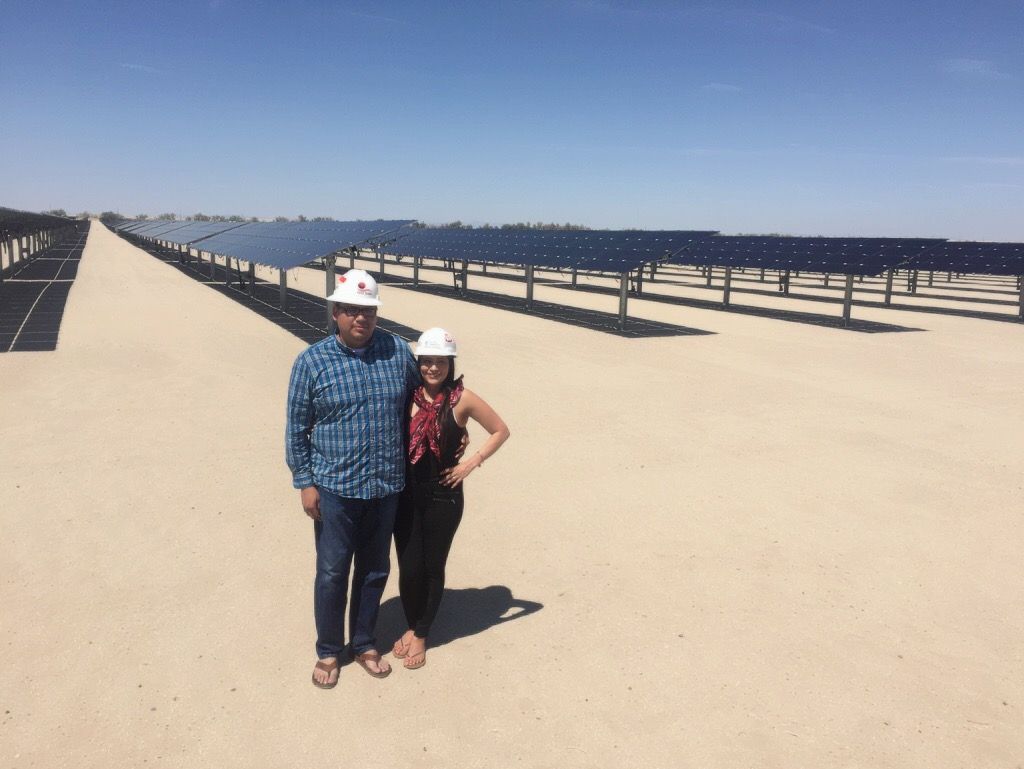
By 2013, Westerman’s company landed a power purchasing agreement (PPA) with the San Diego Gas & Electric Co. The PPA sparked enough interest from financiers and partners to get the $52 million project — a 200-acre, 20-megawatt solar farm in Ocotillo Wells, Calif. — built by 2015.
One partner was project co-developer Regenerate Energy, whose founder and CEO Reyad Fazzani also served as Tallbear Energy’s president. Others included financing from partners like Duke Energy, whose subsidiary Deriva Energy now helps maintain the solar farm in question, and manufacturing through fabricator Solar First.
These days, Westerman runs the day-to-day operations, alongside an energy consulting firm called Red Power he started last year. “I think I might be the only guy that jumped from a few homes to 20 megawatts,” he said. “But can a tribe do the same thing? I think so.”
Westerman spoke with Tribal Business News to discuss the process he used to build the Tallbear Seville solar farm, hashing out a power purchasing agreement, and surviving energy funding austerity. This interview has been edited for clarity and brevity.
How did you first get into the solar industry?
I had a company that did the interiors for casinos. We did a lot of work for a lot of major casinos, as well as some minority contracting with big entities like Disney, Universal Studios, Planet Hollywood. We were called the gingerbread guys — we would fabricate everything and then come out, put signage up, column wraps, things like that, and make everything look nice.
At one point a casino approached us about doing some solar work for them, and I thought well it made sense, because our electricians were already trained by their union to do things like that. It made me start looking at what opportunities were out there, and then a friend of mine on the Morongo Band of Mission Indians’ tribal council asked me to look into solar installations for some of their homes.
I started meeting people in the industry, in particular one company out of San Francisco that was doing renewable energy development called Stellar, and after talking to them for a while they eventually said, “Well, why don’t we hire you for some consulting?” That made me really start looking into opportunities in this space, and that’s when the PPA came up.
What pushed you toward that instead of continuing on casino construction?
Solar is one of the most solid long‑term investments you can make, because the panels are warranted for 30 years. Remember now, which technology is dependable for 30 years that you can invest in? There’s not a lot. Which entities have the longest, best credit and history of making money? It’s the utilities.
So once you have a customer that has a 100‑year history of paying their bills and paying for energy, and you have a contract with them, it works out.
How did you build the San Diego solar project? That’s $52 million in 2010 money — it would have been even more today.
Well, I did it like any other developer. You get some good partners. I made the president of my company a very well‑known, experienced energy professional who had been the vice president of BP Renewables internationally. We got the best engineers. We got the best legal.
What role did the power purchasing agreement play in attracting partners to the deal?
It’s an attractive deal where there can be money made and be paid back. That can bring in people who want to participate.
Of course, getting the PPA isn’t like the golden ticket. Once you get it, you’ve got to prove it. PPAs could be the worst thing that ever happened to you, because you agree to deliver energy. They don’t care how you do it. You’re saying, I’m going to deliver 20 megawatts daily, and you’re signing a contract for that.
What kind of partners got involved once the PPA was in place?
One was the largest infrastructure fund out of Japan. That was our first financing partner. So that was construction finance. We get it built, we get it in operation.
Then you’re looking at a long‑term partner. Our first one was a company out of Canada called Kruger Energy that wanted to own some renewable energy in the United States. Then there was a change in the IRS rules, because they’re an international company, so they had to sell.
We ended up with Duke Energy as our partner to deliver the energy and handle operations and maintenance. So I still am the manager of the day‑to‑day operation.
How did you handle connectivity to the grid?
We used the Sunrise Powerlink, which was a power line from San Diego out to East County, a good 80 miles, and that connected us to the grid out there in the desert, and even provided energy into Arizona. When the Sunrise Powerlink came along, there was a tremendous opportunity east of San Diego in the desert there to interconnect, sell energy back the other way, right into the city.
You’re a 51% owner in the deal, which is part of how it came together, since your business is minority owned, is that right?
That was part of it, yeah - we’re part of the Minority Business Development Supplier Council, and that played into our bid.
What kind of challenges did you deal with along the way?
I got grilled by the California Public Utilities Commission when I was accused of people saying I was just being used as a Native for minority certification. So I had to go and get grilled on what I knew about solar. I had to do a lot of that on my own because they wanted to be sure I was independent, that I really owned and operated my own business.
How did that go?
They told me at the end of it that I am, in fact, an expert in solar. I was completely justified in my contract. But I had to prove that — there’s a lot of things you have to prove as a business owner. A lot of it isn’t just handed to you.
What are your thoughts about building projects like this in the federal funding vacuum created by an administrative policy shift back toward fossil fuels?
Investment tax credits are still there, right? The one I used. Not to mention, I don’t want to give away everything, because I do make money as a consultant too. But there’s new market tax credits, there’s low‑income tax credits. There’s still plenty of tax credits that can be applied to solar that Native American tribes can access. You have to package that up.
You’ve talked a lot about partnerships, too.
I’ve always been lucky in my career, honestly, to meet the right people. I didn’t figure all this out by myself and tribes shouldn’t expect to either.
Everybody goes to tribes and says, “Well, you got to do it all on your own, and you got to learn everything and do it all on your own.” No, they didn’t do that with their other power. You didn’t see them running out making little coal‑fired plants and nuclear plants, did you?
Usually the developer, contractor brings that to the table. For anybody to tell tribes, “You can just go do this” — well, they couldn’t build a million-dollar casino on their own. They got the experts. I don’t see it any different than other development businesses.