- Details
- By Chez Oxendine
- Energy | Environment
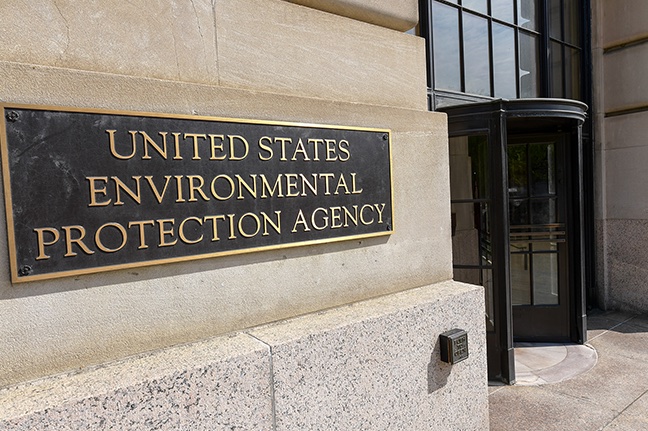
The U.S. Court of Appeals for the D.C. Circuit will rehear a dispute over the Environmental Protection Agency’s freeze of billions in federal grants, including an estimated $1.5 billion earmarked for tribal communities.
In an order issued Wednesday, the court vacated a September panel ruling that sided with the EPA and Citibank, and scheduled oral arguments for Feb. 24, 2026. The decision means the full court — sitting en banc rather than a three-judge panel — will reconsider whether the EPA acted lawfully when it terminated grants to eight nonprofits under the National Clean Investment Fund and Clean Communities Investment Accelerator programs.
The order leaves in place a partial administrative stay first entered in April, leaving grants frozen while litigation continues. The September decision found the district court overstepped when it ordered the EPA and Citibank to continue funding the grants, concluding most of the nonprofits’ claims belonged in the U.S. Court of Federal Claims rather than district court.
“Everyone deserves access to financing for clean energy projects that create good jobs, reduce pollution, and lower energy bills,” Climate United CEO Beth Bafford said in a statement provided to Tribal Business News. “For over nine months, EPA’s unlawful actions have prevented us from delivering clean, affordable energy to hardworking Americans across the country.”
The dispute began in early 2025, when the EPA terminated the grants under the National Clean Investment Fund. At the EPA’s request, Citibank froze associated accounts after federal officials raised concerns about oversight, conflicts of interest, and late‑stage changes to grant agreements.
The nonprofits sued, arguing the freeze was unlawful and jeopardized clean‑energy projects planned by community lenders, green banks, and mission‑driven financial institutions. A federal district court initially sided with the grantees, issuing a preliminary injunction requiring the EPA and Citibank to continue funding.
The D.C. Circuit panel vacated that injunction in September, finding the plaintiffs were unlikely to succeed on the merits and that the district court lacked jurisdiction over most of their claims. With Wednesday’s order, that ruling is now itself vacated, and the case restarts before the full court.
The rehearing prolongs uncertainty for lenders and project developers who had lined up solar installations, efficiency upgrades, and workforce programs. Several tribal and community lenders previously told Tribal Business News that the halt stalled projects they had expected to launch in 2025.
The EPA has defended its actions as necessary to ensure proper stewardship of public funds, while Citibank has argued it acted appropriately after receiving an FBI recommendation tied to the agency’s review.
The Climate United case is not the only pushback against EPA cancellations currently working its way through the courts. The Solar for All program, a $7 billion program under the GGRF, was designed to expand rooftop and community solar for low-income and disadvantaged households through 60 state, tribal, territorial, and nonprofit grantees. More than $500 million under that program was earmarked for tribes and Native-led organizations.
After those grants were fully awarded and agreements signed in 2024, the Trump administration moved in August 2025 to terminate Solar for All and reclaim most of the money, arguing that the One Big Beautiful Bill Act had stripped the EPA of authority to run the program.
State, labor, and nonprofit groups quickly sued, with one case filed in U.S. District Court in Rhode Island by labor unions and advocates who said the cancellation was unlawful and would kill jobs and drive up power bills, and another brought by 22 states in federal court in Washington state, accusing EPA of breaching binding grant agreements and violating the Administrative Procedure Act.
Those cases seek to force the EPA to reinstate the grants, similar to Climate United’s push. A final decision from the en banc court is expected later in 2026, while responses to the Solar for All lawsuits remain pending.
“We will continue to press forward on behalf of the communities we serve, and we look forward to the judges’ reconsideration of our case so we can get back to work,” Bafford said.