- Details
- By Chez Oxendine
- Energy | Environment
The Prairie Island Indian Community set its net zero carbon emissions goal in 2021, becoming one of the first tribal nations in the country to commit to eliminating or offsetting all the carbon the community produces.
Four years later, the tribe is roughly halfway to meeting that target, driven by a slate of large‑scale energy projects, infrastructure upgrades and a long-term energy plan.
“Net zero” refers to balancing the carbon a community releases with the carbon it removes or avoids. Prairie Island’s goal requires eliminating or offsetting more than 20 million pounds of carbon annually.
The tribe’s Net Zero Program Manager Andrea Zimmerman said the tribe’s decision to pursue net zero is tied to a “long and painful” history, including energy development near the reservation without tribal consent. She pointed to the Prairie Island Nuclear Generating Plant, which was built next to the reservation more than 50 years ago before modern tribal consultation requirements were in place.
“Prairie Island’s net zero work is the community’s response,” Zimmerman said. “It’s the tribe’s way of expressing energy sovereignty and embodying the community’s values.”
The tribe approached the Minnesota Legislature as early as 2018 to access the state’s Renewable Development Account, which is funded by Xcel Energy in exchange for nuclear waste storage at Prairie Island. After several years of legislative efforts, lawmakers ultimately allocated $46.2 million to the tribe, Zimmerman said, allowing the first phase of projects to move forward.
The tribe has since supplemented that funding with additional state grants and federal support, including funding under the Inflation Reduction Act and Infrastructure Investment and Job Act, ZImmerman said. The tribe generated $470,473 in revenue from its solar power purchase agreement since the project entered commercial operation in May 2024, according to its July 2025 Net Zero Progress Report to the Minnesota legislature.
Early planning efforts focused on offsetting on-reservation energy use through a mix of onsite solar, microgrids, geothermal systems and energy efficiency upgrades. As preliminary engineering and procurement advanced, the tribe narrowed the scope of earlier concepts that exceeded available funding and concentrated resources on a smaller number of large projects, including a utility-scale solar array designed to generate revenue through a power purchase agreement.
The first phase of the revised project includes a 5.4‑megawatt solar array and a geothermal and electrification project at the tribe’s Welch-based Treasure Island Resort and Casino.
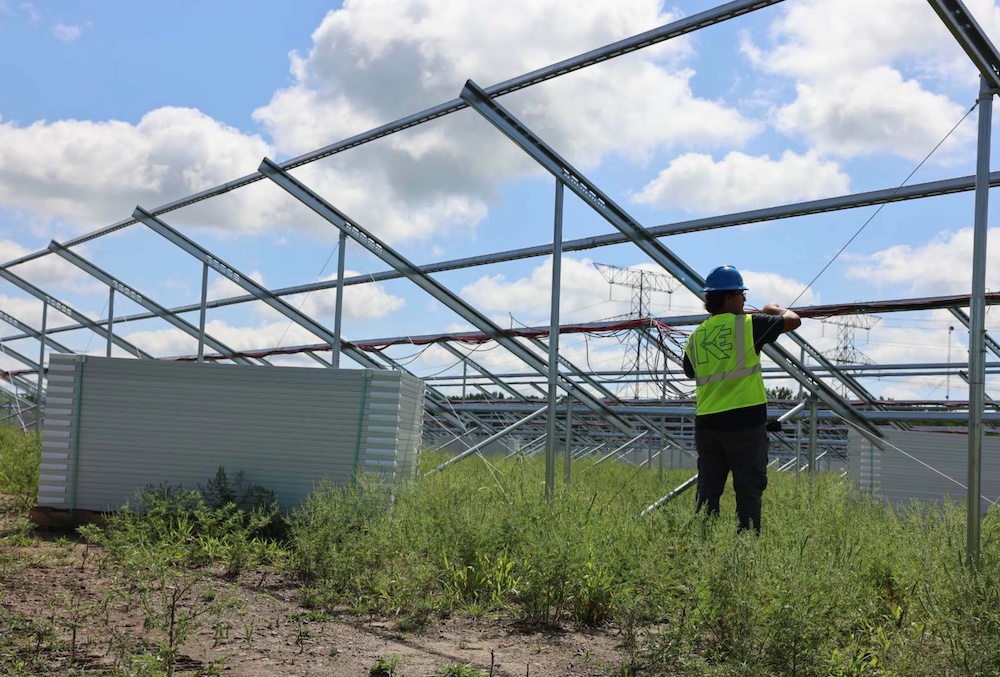
The solar array sits on about 20 acres of tribal land and includes roughly 10,000 panels. Construction took place through most of 2023 and early 2024, and the project went live in May 2024. The array is a front‑of‑the‑meter project. All power generated is sold to Great River Energy through the aforementioned, 30-year power purchase agreement, creating a revenue stream for the tribe.
Zimmerman said the geothermal conversion at the casino is also nearing completion. The project replaces aging heating, cooling and hot water systems that were close to the end of their useful life. The geothermal system will reduce emissions and lower long‑term energy costs by relying on the constant temperature of the earth rather than energy‑intensive chillers.
“It was going to need to be replaced anyway,” she said. “It was a great opportunity to upgrade critical infrastructure that was becoming an issue in terms of higher maintenance costs and risk to the community.”
With those two projects in place, the program is about “halfway” to its target, Zimmerman said. Other ongoing projects include a workforce development program with Xcel Energy, as well as a large-scale retrofit initiative for community homes. Zimmerman said the latter will likely continue into 2027.
The tribe is now updating its net zero plan to identify the next set of projects, though specific timelines have not yet been established. Currently, the most likely next steps include transitioning some of the tribe’s transportation fleet to electric vehicles, as well as more opportunities for commercial energy efficiency in kind with the geothermal work at the casino.
In the wake of a federal pivot away from renewable energy funding, it’s likely the tribe will need to seek other investment, however, Zimmerman noted. With that in mind, planning becomes more important than ever to establish a firm scope ahead of seeking capital.
“Starting with a concrete goal is very important,” she said. “If you don’t know where you’re trying to go, then it becomes a challenge to get there, and having that community support is critical.”
She said competitive procurement and strong partnerships have also been key. The tribe used an open-bidding process to secure development partners for retrofits, engineering, and the solar array.
Energy consultant Rita Mackwood, a longtime net zero advocate who is not involved with Prairie Island, says the tribe’s project could be a model for other tribes, particularly those with access to state funding.
Mackwood, who runs Firebrand Environmental, a Charlotte, N.C.-based energy consultancy,
said net zero projects often spur economic activity as construction, operations and maintenance work expands.
She said the current funding landscape for climate resiliency is “grim,” but tribes should continue pursuing emissions-reduction strategies with clear economic returns.
“As you can see with Prairie Island, they turned that into a power purchase agreement, which is revenue,” Mackwood said. “And a lot of states and local energy companies would be interested in reducing their own costs. If the money’s there, they should be seeking that out.”
As Prairie Island moves into its next phase, the tribe plans to expand residential upgrades, complete the casino conversion, continue workforce training and identify additional clean‑energy projects. Zimmerman said the work is focused on reducing long-term operating risk, strengthening energy sovereignty and improving infrastructure resilience.
The tribe has also restored more than 400 acres of native prairie and invested in wild rice, shoreline and oak savanna projects, describing these efforts as part of the same climate and sovereignty framework as the energy work.
“There’s been a lot of benefits to this work already,” Zimmerman said. “I think we’re going to see a lot more as it continues to grow.”