- Details
- By Chez Oxendine
- Energy | Environment
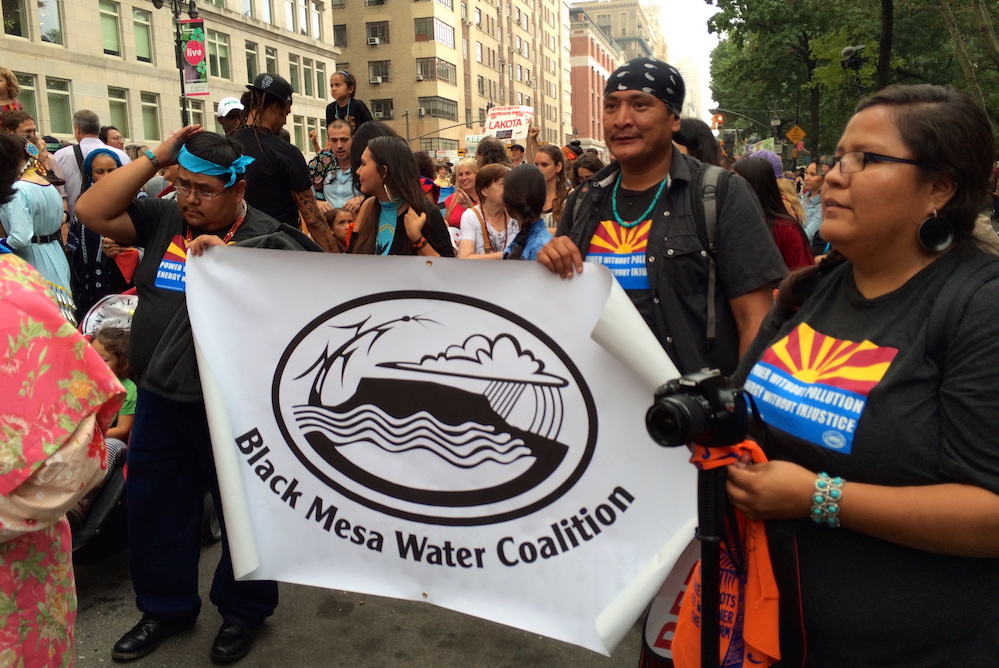
A proposed federal rule could limit the ability of tribes to challenge early-stage hydropower projects, raising concerns among Navajo community groups about renewed development pressure on Black Mesa, a Navajo Nation region long shaped by coal mining.
The change stems from an October 23, 2025, letter from Secretary of Energy Chris Wright directing the Federal Energy Regulatory Commission (FERC) to initiate rulemaking under Section 403 of the Department of Energy Organization Act. The proposal would clarify that “an application for a preliminary permit will not be denied solely on the basis of opposition from a third party,” including tribes.
The timing is significant for three pumped storage proposals on Navajo Nation land near Kayenta. FERC denied preliminary permits for those projects in 2024 following tribal and local opposition, but the proposed rule could reopen a pathway for developers to advance them.
The proposals would construct new reservoirs, underground powerhouses and long water conveyance tunnels, using the mesa’s steep escarpment to pump water uphill when electricity prices are low and release it downhill to generate power when prices rise. Each application identifies the Colorado River, the San Juan River, and two local aquifers as potential water sources.
Community members say the projects would require extensive new roads, transmission lines and water withdrawals in an area still recovering from decades of coal mining. Black Mesa was the former site of an open-pit coal mine whose effects are still being felt today, according to a press release from Navajo water rights group Tó Nizhóní Ání and a coalition called Protect Nihimá Dził Yíjiin.
“The Black Mesa Policy was a step in the right direction by giving power back to impacted communities,” said Herb Yazzie, a resident within the coal-lease area. He questioned what happened to the Navajo Nation’s earlier commitment to vet such projects and said industrial use of Navajo water for energy exported off tribal land should be prohibited.
The Navajo Nation has repeatedly opposed the projects, intervening in reviews as recently as 2022. In a letter, provided to Tribal Business News, the tribe wrote the proposals “may adversely impact the land, water … wildlife and plants … and cultural resources of the Navajo Nation.”
In his October directive, DOE’s Wright wrote that preliminary permits “grant no land-disturbing or other property rights” and are intended only to allow feasibility studies, arguing that recent denials based on third-party opposition “cannot be squared” with federal law.
Advocates say refusing tribal input on projects could be catastrophic for those downstream.
“Water access and reliability are crucial for our communities on Black Mesa and the southwest region of the United States,” Adrian Herder, a community organizer, said in a statement. “Energy projects that propose to use large amounts of water for energy production should be vetted diligently.”