- Details
- By Chez Oxendine
- Indigenous Entrepreneurs
For many restaurant startups, a food truck is the first step toward opening a brick-and-mortar location. For Indigenous Eats, it happened in reverse.
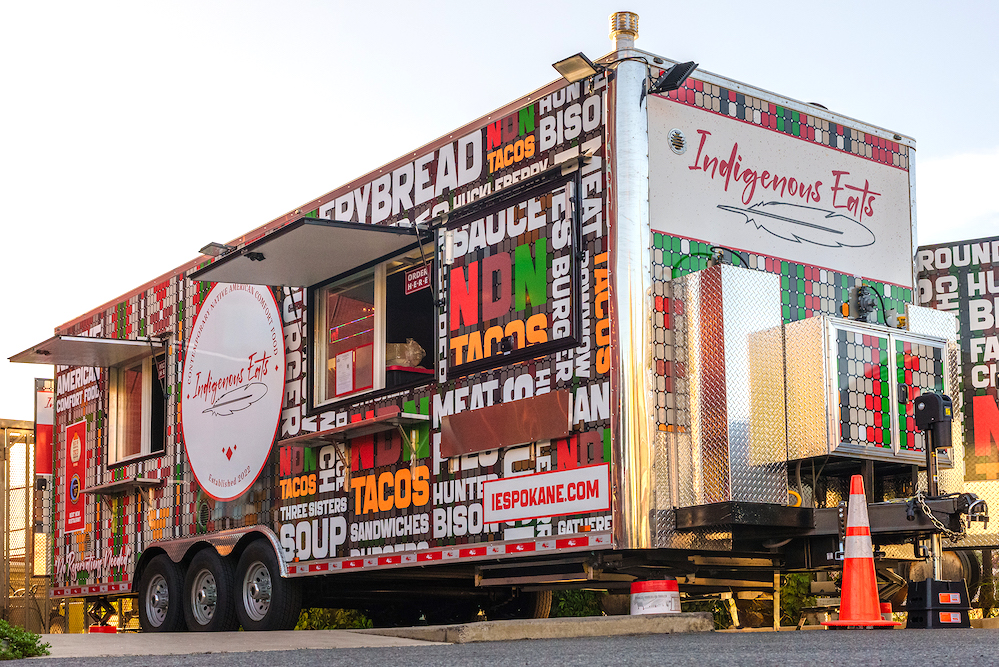
After opening two restaurants and a retail shop in less than five years, the Native-owned business made its largest expansion investment last summer: a $120,000 food-trailer setup built for the powwow circuit.
The custom trailer travels to powwows and events across Washington, Oregon and Montana, serving as both a revenue source and rolling advertisement for the Native-owned restaurant company.
“It’s a huge billboard,” co-owner Jenny Slagle said. “We’re building brand awareness for future customers, and we’re trying to test out different markets to see where maybe our next location could be.”
For Slagle and her husband, Andrew, the trailer also represents a return to the powwow circuit where the business got its start.
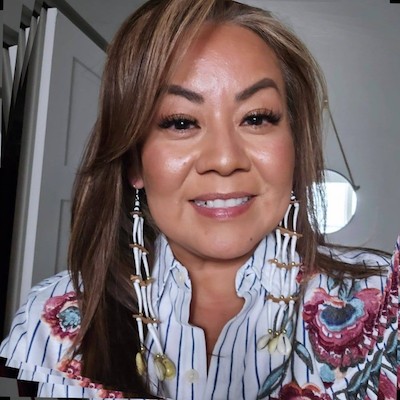
Slagle, an enrolled member of the Yakama Nation and Northern Arapaho descendant, said the idea for Indigenous Eats grew out of years spent running a concession stand at Spokane’s Gathering at the Falls Powwow with her family. The restaurant concept became more concrete after Andrew used it as a business plan while earning his college degree.
Coming out of the pandemic in 2021, the couple decided the time was right.
Indigenous Eats opened its first location near Gonzaga University in August 2022, serving a menu built around foods common at powwows and community gatherings, including Indian tacos and bison dishes. Many of the recipes track back to foods served at powwows and family gatherings, including frybread made from her mother’s recipe.
“We really wanted to create a space that was inviting of all cultures to experience what we call contemporary Native American comfort food,” Slagle said.
The restaurant expanded quickly, maintaining a majority Native workforce and drawing local recognition for its menu and atmosphere. In 2023, the company opened a second location in the River Park Square mall food court.
Within months, national attention followed. A writer from USA Today visited the restaurant through a local tourism partnership, and Indigenous Eats was later named a top‑four finalist for Best New Restaurant in the publication’s national reader poll.
Last week, Indigenous Eats also received a $20,000 Amex Shop Small Grant from American Express and Main Street America to support Native Trivia Nights and other cultural events at its restaurants.
Slagle said the company now employs 13 full‑time workers across its restaurants and food trailer, plus three employees at its retail shop, Indigenous Chic.
“We try to make it worth their while and give them a livable wage,” she said.
The company’s growth has required financing and new operating systems.
Slagle said the first restaurant opened with less than $100,000 in startup costs, supported by a foundation grant and a Bureau of Indian Affairs‑guaranteed loan.
The food trailer, however, required a larger investment.
“We custom ordered our trailer, and it was $120,000,” she said. “We have to buy a new truck to haul the trailer. We paid way more into this than we had for either of our locations.”
The company also opened Indigenous Chic in late 2025, a retail space featuring Native fashion designers, clothing brands and home goods. The Spokane boutique features handcrafted jewelry, apparel, wearable art and home goods created by Indigenous artists and brands. Slagle said the store was designed as both a retail space and a way to expand Indigenous Eats’ broader focus on Native culture, visibility and entrepreneurship.
Slagle said scaling the business has brought challenges, especially rising food and labor costs.
“I wouldn’t say I feel safe in any aspect of being an entrepreneur,” she said. “Especially right now with food costs soaring the way that they continue to trend.”
Still, she said multiple locations have helped the company negotiate better pricing with distributors.
One of Slagle’s priorities has been sourcing Native‑produced ingredients. Indigenous Eats buys ground bison from the Kalispel Tribe, which operates its own USDA‑supported processing facility.
“They’ve been really amazing partners,” she said.
The company’s growth comes as Indigenous restaurants gain broader national attention. The sector remains relatively small but is expanding, driven by chefs focused on traditional foodways, local sourcing and cultural education, according to prior Tribal Business News reporting.
Restaurants such as Owamni in Minneapolis and Wahpepah’s Kitchen in Oakland have helped push Indigenous cuisine into mainstream food media, emphasizing sustainability, pre‑colonial ingredients and community‑based missions.
Ben Jacobs, co‑owner of Denver-based Tocabe, said the growth reflects long‑standing demand that previously lacked outlets.
“I think it’s not that people didn’t desire it before. It just wasn’t readily available as it is now,” he said. “Now you’re seeing people build those supply chains and reach out and work with local tribes to get those ingredients, and it’s starting to meet the demand.”
Jacobs said the rise of Indigenous restaurants has also strengthened Native agriculture and food production, making it easier for restaurants to source traditional foods and Native-produced ingredients.
“The beautiful thing is that there’s been more accessibility for us… to actually have the ability to source Native‑produced products from further reaches than we had before,” he said. “Native‑based concepts serving Native cuisine… everyone’s doing their best to make sure they support the Native producers.”
Jacobs said he sees more Native restaurateurs entering the market, but he cautioned that the industry remains difficult.
“It’s really hard,” he said. “We can create the most amazing food in the world, but if we overreach in terms of a location or a space that’s way too large or the rent is way too high, it becomes incredibly expensive.”
Jacobs said success requires both financial discipline and hands‑on leadership. He said Native restaurateurs must balance cultural mission with business fundamentals.
“You have to stay focused on making sure that you are maintaining proper cost control while you’re sharing and creating culture,” he said.
“We’re not just another burger joint. You have to truly be in there to build what you’re creating.”
Slagle said she spends much of her time working in the food truck as it returns to powwows and events across the region.
“Everywhere that we drive it, it’s an attraction,” she said. “We’re coming full circle.”