- Details
- By Chez Oxendine
- Energy | Environment
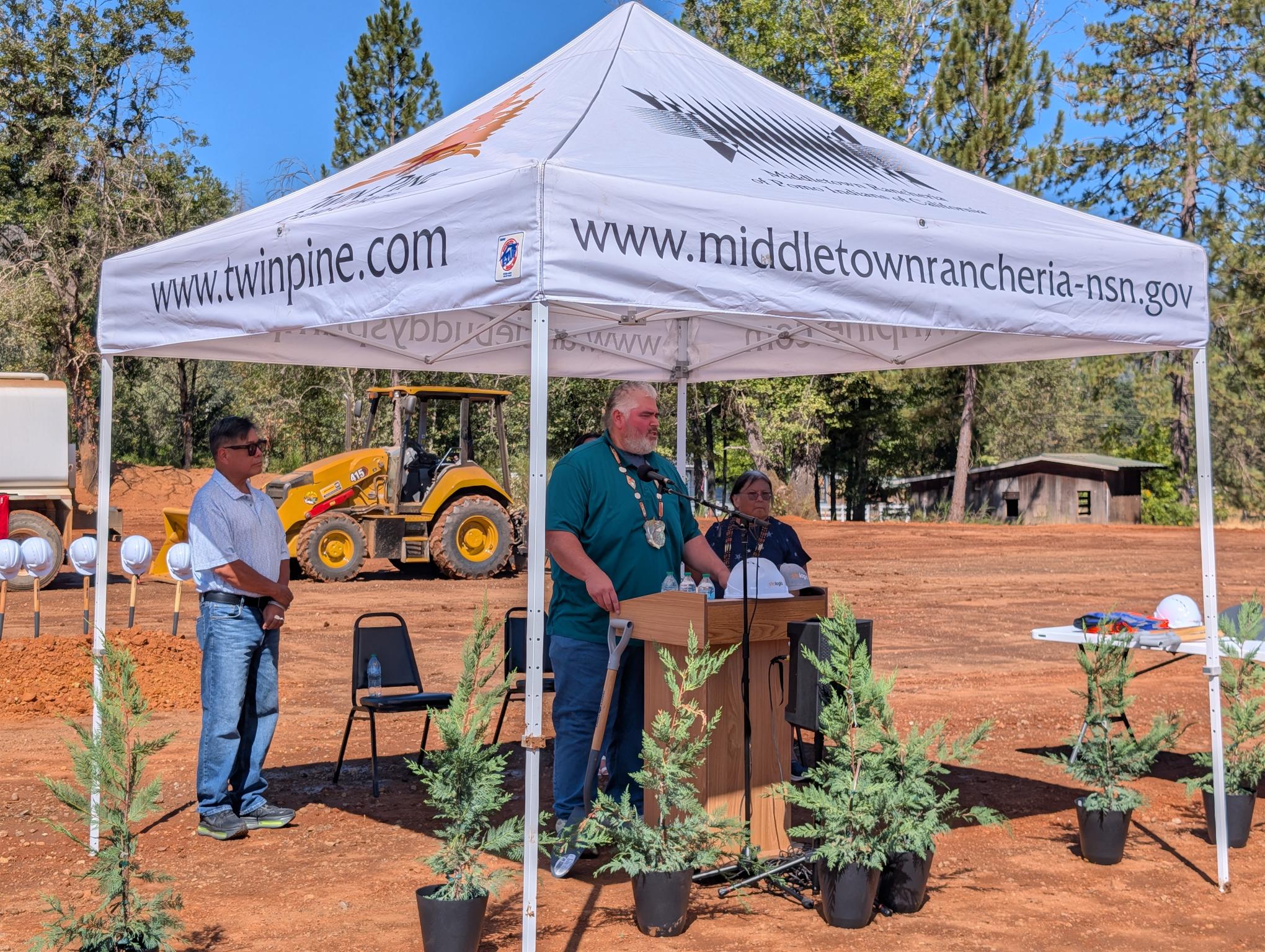
The Middletown Rancheria of Pomo Indians has begun construction on a $3.7 million solar project that will serve as the first piece of a planned tribal utility capable of eventually powering the tribe’s homes, government operations and businesses.
The project is the first tribal clean energy development financed through the California Energy Commission’s Energy Conservation Assistance Act loan program since tribes became eligible. The 696 kW project will include six covered-parking solar arrays directly behind the casino and the tribe’s event and evacuation center.
Chairman Jose “Moke” Simon III said the project is a first step toward a planned 2.5‑ to 3‑megawatt microgrid that would further strengthen the tribe’s energy sovereignty and emergency resilience.
“This really is the step of building out our Tribal Utility Authority,” Simon told Tribal Business News. “It is the foundation for a system that will eventually give our tribal members the feeling of security and constant supply from our own organization.”
Initially, the system will support the tribe’s casino and an evacuation center, which has served as an emergency shelter since the 2015 Valley Fire, Simon said. The project is expected to reduce nearly 990,000 kWh of electricity consumption in the first year.
The solar project is financed through a $3 million, 1% ECAA loan — the first awarded to a California tribe after state lawmakers expanded eligibility to tribes. The CEC estimated the project’s total cost at about $3.67 million when it approved the financing in 2024. The commission projects annual utility savings of about $212,000 and a simple payback period of 14.1 years.
Simon said the loan structure allows the tribe to operate the system for a year before payments begin, giving the tribe time to realize energy savings before beginning repayment on the loan.
Simon said the tribe preferred the ECAA loan in part because it gave the tribe greater control over the project than other financing options it considered.
The planned microgrid would serve a relatively small tribal land base. Middletown has 262 enrolled members, Simon said, and its trust lands expanded last year from about 80 acres to 353 acres.
The ECAA program, historically used by schools and public agencies, expanded under legislation enacted in 2021 to make California Native American tribes eligible for loans. The Middletown Rancheria project is the first to move into construction under the expanded eligibility, said CEC Commissioner J. Andrew McAllister.
“California remains committed to working with tribes to advance energy sovereignty, lower energy costs, and strengthen community resilience,” the commission wrote in an emailed statement to Tribal Business News. “Middletown Rancheria is an example of how the CEC commits to working with tribes moving forward.”
Simon said construction is expected to be completed by late November or December, with full closeout scheduled for mid‑January, pending PG&E approvals for permission to operate. He said the tribe is contributing in‑kind labor and value engineering to keep the project within the loan budget.
“We will always have a connection with PG&E here on our Rancheria, but our vision is to get the Tribal Utility Authority up,” Simon said. “This is a really big first step toward that.”
Brian Edwards contributed reporting.