- Details
- By Chez Oxendine
- Energy | Environment
A California tribe expects to cut its electricity costs nearly in half after completing a 2.23‑megawatt solar carport project that required no upfront tribal capital.
The Coyote Valley Band of Pomo Indians expects to save about $450,000 a year through the project, financed with a $3.2 million federal grant and a long-term power purchase agreement.
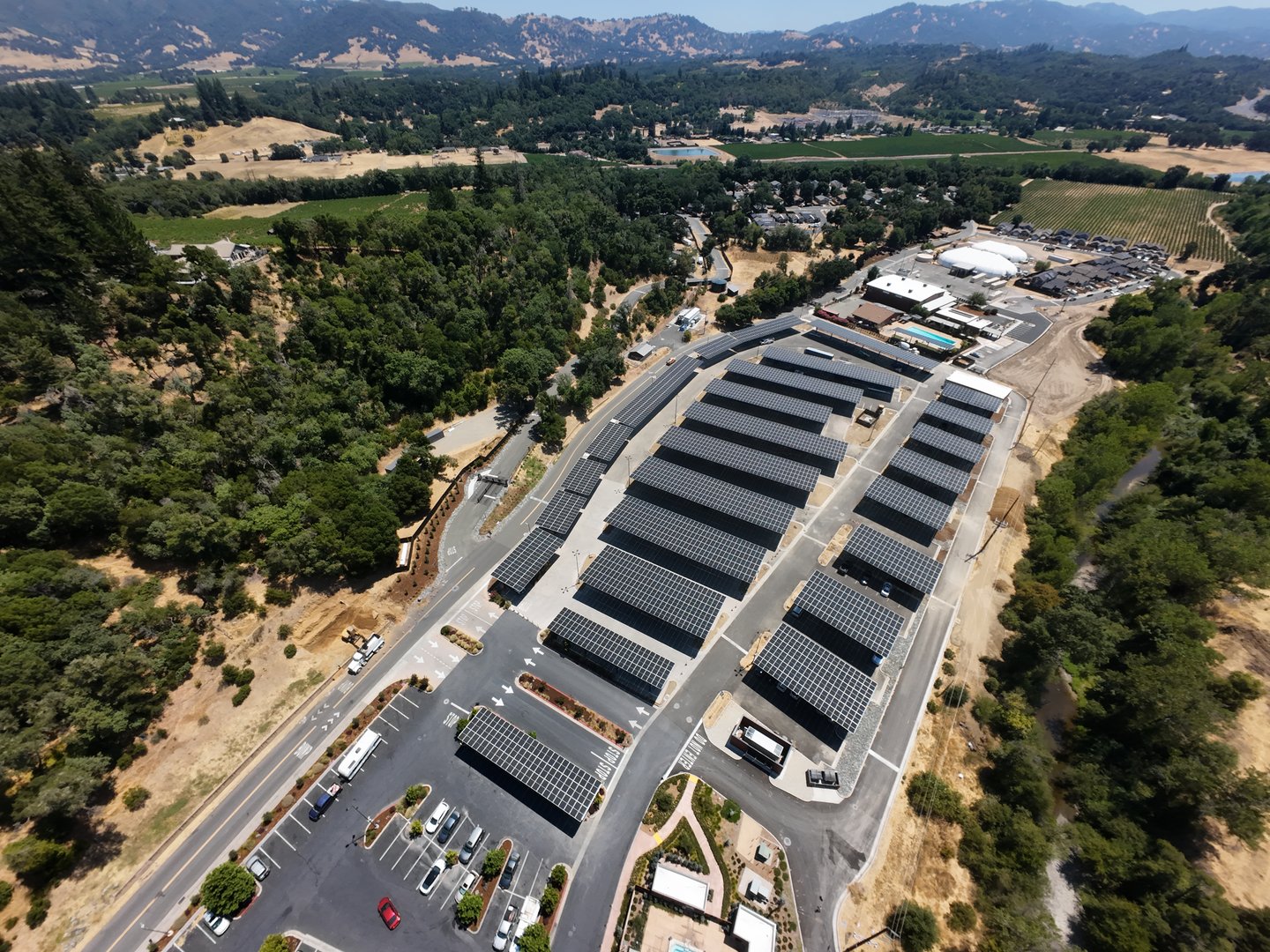
The project includes a 1,411-kilowatt solar canopy across the casino’s parking areas and an 817.5-kilowatt system at the Coyote Valley Hotel that supplies power to the adjacent tribal council offices, convenience store and wastewater treatment facility. Together, the systems are expected to generate about 3,472 megawatt-hours of electricity annually — about 90% of the site’s energy use.
The project was developed by Scottsdale, Ariz.-based Watthub Renewables and built by SunRenu Solar, also based in Scottsdale, and financed by Baltimore, Md.-based Sunrock Distributed Generation. The tribe received the $3.2 million grant from the U.S. Department of Energy and put up no upfront capital toward the roughly $9 million project.
Under the agreement, Sunrock will own the system and sell electricity to the tribe under a 25-year power purchase agreement at a fixed rate below what the tribe previously paid to Pacific Gas & Electric Co. The project marks the first time Sunrock has financed a tribal energy installation, according to Johnson.
Rachel Whetstone, CFO of the Coyote Valley Tribal Council, said tribal leaders evaluated the project through the lens of long‑term sustainability, operational resilience and responsible stewardship of tribal resources.
“Reduced energy expenditures create additional financial flexibility and help strengthen the overall stability of tribal operations,” Whetstone told Tribal Business News. “Every dollar retained within tribal enterprises supports the tribe’s ability to plan for future priorities, maintain critical services, invest in infrastructure, and pursue opportunities that improve the quality of life for tribal members.”
The tribe’s electricity costs had climbed to nearly 35 cents per kilowatt‑hour, according to Watthub CEO John McDonnell. With limited roof space and insufficient land for a ground-mounted system, the project was designed as solar canopies over parking areas at the tribal casino and hotel complex, generating power while providing shade for guests and employees.
The agreement allowed Sunrock to put up the capital for the project in exchange for a predictable stream of energy payments from the tribe. Claire Broido Johnson, Sunrock co-founder and president, said the tribe’s creditworthiness made the investment viable.
“We know that Coyote Valley Band of Pomo Indians is a creditworthy entity, we know that they’re going to pay their utility bills,” Broido Johnson said. “Because we know we’ll be getting paid a certain dollar amount every year for 25 years, we felt comfortable putting a bunch of money upfront to finance this solar canopy.”
Watthub Renewables helped prepare the tribe’s DOE grant application and designed the project around the site’s limited space and the electricity needs of multiple facilities. The company has written about a dozen tribal grant applications for the DOE over the past 16 years, McDonnell said.
McDonnell said the tribe’s high electricity costs — and the prospect of further rate increases — made the grant particularly valuable because it allowed Watthub to design a larger project serving multiple tribal facilities.
“These bills are some of the highest I’ve ever seen for casinos,” McDonnell said. “So we applied for a grant, got the grant, and went big. We included as many facilities as possible to make the biggest impact.”
Watthub used meter aggregation to offset electricity use at other tribal facilities, including the convenience store, wastewater treatment plant and administrative buildings. McDonnell said the approach allowed the tribe to capture “the full value of the grant.”
The system is expected to reduce the tribe’s electricity costs by more than 45% after payments to Sunrock, leaving the tribe with about $450,000 in annual savings, McDonnall said.
With the system now operational, Whetstone said the lower and more predictable energy costs will give the tribe greater financial flexibility to maintain services, invest in infrastructure and plan for future priorities.
Broido Johnson said the project gave Sunrock experience navigating a tribal approval process and could lead the company to pursue additional projects in Indian Country.
“I think we are very interested,” Broido Johnson said. “Now that we have a better understanding of how tribal organizations work, we’re cautiously optimistic that the process will be smooth.”
EDITOR'S NOTE: This story has been updated to correct the last names of John McDonnell and Claire Broido Johnson.