- Details
- By Chez Oxendine
- Food | Agriculture
National organizations are pushing tribal nations to establish formal agricultural authority, pointing to Oneida Nation and a handful of other early adopters as models for claiming regulatory control before state and local agencies do it by default.
When food entrepreneurs began starting businesses on Oneida Nation land in the early 2000s, tribal leaders faced a choice: regulate their own food safety, or be prepared for someone else to do it for them.
Tribal members were selling prepared foods in community buildings and tribally owned spaces, but the tribe had no unified rules governing that activity. Leaders understood that if they didn’t define those rules themselves, state or local agencies would step in — potentially without knowledge of the Oneida Nation’s laws or its cultural connections to food and the act of sharing it.
They chose to regulate themselves.
“It’s such a great example of exercising tribal sovereignty and self‑regulation,” said Vanessa Miller, food and agriculture area manager for the tribe, told Tribal Business News. “We can adjust and pivot and use flexibility as needed. We always wanted to keep public health at the forefront, of course, but we also wanted to support the needs of our membership in the way that both keeps them safe and enhances our local economy.”
Now, the Native American Agriculture Fund and the Indigenous Food and Agriculture Initiative are pointing to Oneida Nation as a model for tribes across Indian Country. The organizations are pushing tribal nations to establish departments of agriculture, arguing that tribes must occupy regulatory space on their own lands before state and local agencies fill it by default.
The stakes extend beyond farming. Agriculture regulation in Indian Country touches food safety, land use, environmental protection, public health and small-business development.
Yet only a handful of tribes have moved to formalize that authority through stand-alone departments of agriculture or similar structures, leaving much of that regulatory space unsettled.
Some tribes are already showing what it looks like to claim that ground. The Ho-Chunk Nation and the Menominee Indian Tribe of Wisconsin have established agriculture departments to coordinate food systems and land management, while the Mashantucket Pequot Tribal Nation in Connecticut has created a tribal department of agriculture tied to food security and enterprise development. Along with the Oneida Nation, those examples highlight a notable concentration in Wisconsin — suggesting that the model is less experimental than replicable.
Carly Griffith Hotvedt, executive director of IFAI, said tribes risk losing ground when they don’t define their own rules.
“Anytime tribes don’t occupy regulatory space within their jurisdiction, we see encroachment from external jurisdictions that try to exert influence,” she said. “A tribal department of agriculture can be a conduit to facilitate intervention into that.”
 (L-R): Stanger-McLaughlin, HotvedtThe Native American Agriculture Fund has invested nearly $300,000 in tribal efforts to build agriculture departments and continues to fund IFAI's work on model codes, food safety training and resource management planning.
“This is tribal sovereignty in action,” said NAAF CEO Toni Stanger-McLaughlin. “If you don't fill the space, somebody else will.”
Some tribes already regulate in specific areas, Hotvedt said. She pointed to examples like the Hoopa Valley Tribe, who employ a food safety inspector who works under a mutual agreement with the county, or how Navajo Nation’s junk food tax ties revenue to health initiatives. In northeast Oklahoma, a group of tribes has established an intertribal regulation to allow each tribe’s hunting and fishing licenses to be used on other tribes’ reservation lands.
Hotvedt said these examples show tribes are already doing the work, even if the programs aren’t unified under a single department. A dedicated agriculture department can bring those efforts together, provide continuity of leadership and create a recognizable point of contact for federal agencies, funders and other tribes.
Stanger‑McLaughlin said her organization is working with state agriculture leaders, Farm Bureau chapters and the National Association of State Departments of Agriculture to prepare states for increased tribal authority. She said the effort is meant to strengthen rural communities, not compete with state agencies.
“We’re not taking anything away from states,” she said. “We’re strengthening sovereignty that tribes already possess.”
Back in Wisconsin, Oneida’s experience shows how that authority can play out on the ground. The tribe’s reservation is checkerboarded across multiple municipalities, yet Oneida has been able to assert its jurisdiction without conflict, Miller said. Some tribal businesses were once dual-licensed by the city of Green Bay, but the tribe worked with local officials to clarify roles.
“If these laws are in place to benefit public health, duplicating services doesn’t help anyone,” she said.
Clear rules help entrepreneurs start small food businesses, and the tribe has tailored those rules to cultural foods and community needs. In 2021, Oneida amended its food service law to include an exemption for cottage food operators that allows low‑risk foods, including processed white corn, to be sold more easily.
“When we say sovereignty, some people think it’s a lack of regulation,” Miller said. “But that could not be any less true. What it really means is that we are regulating ourselves.”
Oneida Nation also adopted a food sovereignty policy and a rights of nature proclamation in 2021, which guide how the tribe manages soil, water and land. Miller said those laws help the Nation stay accountable to its own standards and cultural teachings.
“It keeps us responsible to ourselves and our original instructions as Oneida people,” she said.
Miller said the tribe has also begun conducting baseline assessments of its land and agricultural practices, including soil health, as part of a broader effort to treat environmental conditions as public health issues and apply its own standards alongside federal requirements.
Food and agriculture are central to cultural identity and community health, she said, adding that investing in those systems helps address the long-standing disconnection between tribal communities, their food systems and land stewardship.
“Agriculture and our food systems are such an important piece of mending that disconnection,” she said. “It’s crucial to have those codes in place so that you can maintain sovereignty over those things.”
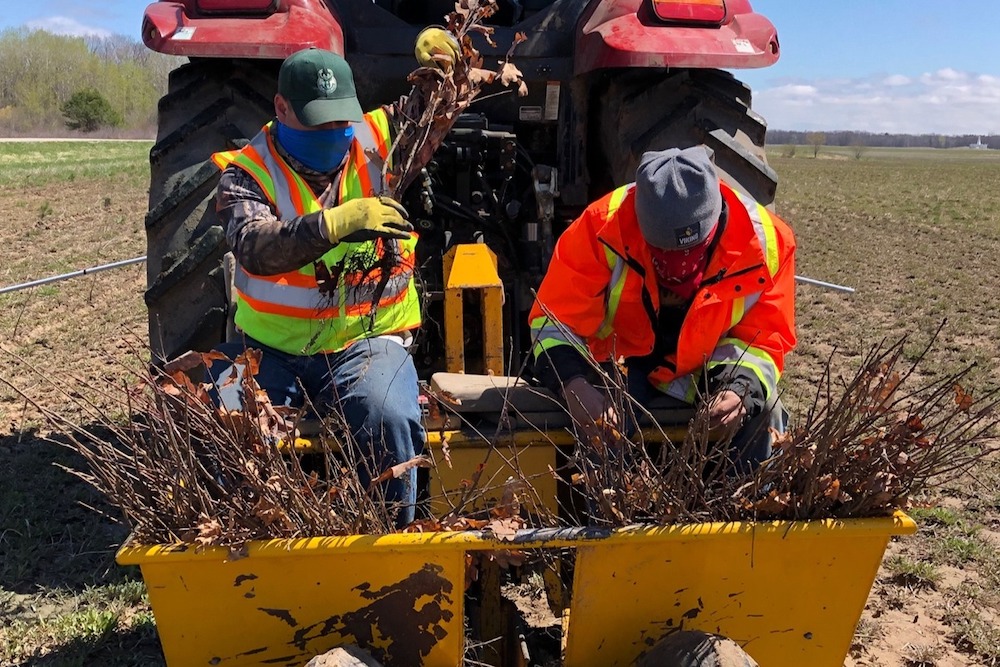
 Vanessa Miller, food and agriculture area manager for the Oneida Nation, said the tribe’s food sovereignty policy and rights of nature proclamation help keep Oneida accountable to its own laws and cultural teachings. “It keeps us responsible to ourselves and our original instructions as Oneida people,” she said. (Photo: North Central SARE video/YouTube)
The regulatory framework also supports economic development. Tribes can build agribusiness enterprises, support tribal entrepreneurs and use federal or private funding, Hotvedt said. She pointed to Choctaw Nation, where agricultural operations are housed under the commerce arm, allowing business strategy and land management to work together.
Hotvedt said the next decade will be critical as more tribes adopt the model code, build regulatory capacity and formalize their agriculture departments.
“Tribal sovereignty requires food sovereignty,” she said. “Tribal departments of agriculture are conduits to accomplish that goal.”