


- Details
- By Jamie Miller, Special to Tribal Business News
- Policy and Law
For more than a decade, Glendon Smith worked inside the tribal court he still calls home. He later served on the Confederated Tribes of the Warm Springs Reservation of Oregon’s tribal council and as its secretary-treasurer and CEO.
Now, Smith sits on the other side of the government-to-government table.
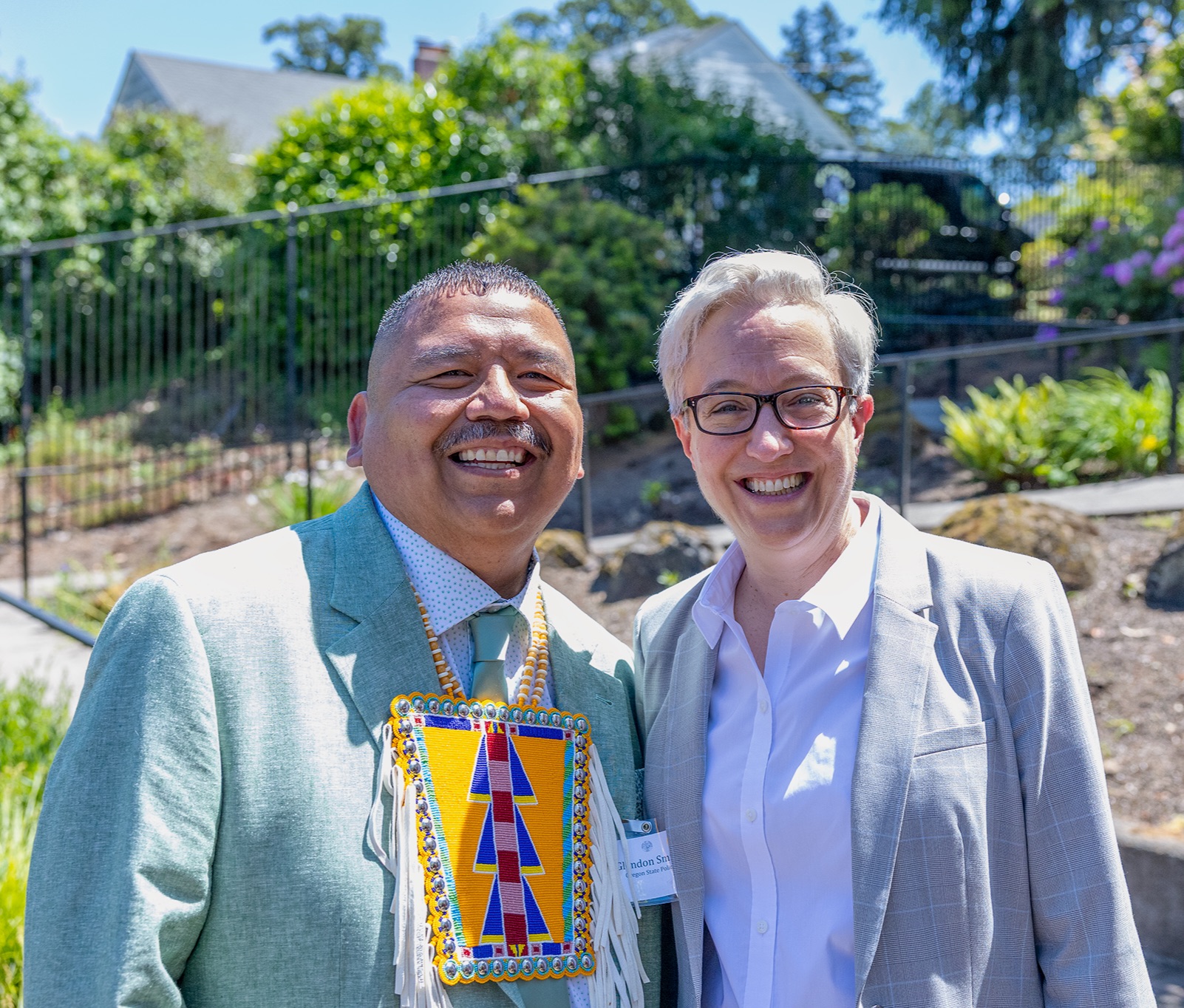
As a tribal liaison for the state of Oregon, Smith works with the state’s nine federally recognized tribes, helping bridge gaps in communication and improve collaboration on issues ranging from wildlife conservation to tribal sovereignty. In that work, he carries his Native identity with him — sometimes literally, through beadwork made by his spouse.
Last month, Oregon Gov. Tina Kotek presented Smith with the Public Service Ambassador Award for “leading with purpose” and his work strengthening relationships between law enforcement and Oregon tribes.
This interview has been edited for clarity and brevity.
What led you to working for the Oregon government as a tribal liaison?
I’m a citizen of the Confederated Tribes of the Warm Springs Reservation of Oregon and have lived here most of my life.
After high school I went to Oregon State University then worked for tribal court for 10 years as an associate judge. Eventually, I got promoted to one of the council officer positions as secretary treasurer/CEO for the tribe. In 2019, I was elected to the 28th tribal council. While serving on council, I was also reappointed to the secretary treasurer position again — so I did both. After my term ended, I looked for positions with the state and got hired as the tribal liaison.
Given your previous work experience was for the tribe and now you work for a state agency, how do figuratively, or literally, wear your native identity?
My spouse, Christine Johnson, makes all my beadwork, and that’s gotten a lot of attention in places I’ve traveled and with people I’ve met in other leadership positions. I lost my mom when I was young, and I’d never had regalia or beadwork since she passed over 30 years ago, until I got with my spouse. It’s created more opportunities than you’d ever think. People have taken me more seriously, and it lets people know I haven’t forgotten about my heritage and who I am and where I come from. I’m proud of that. It lets people know that I’m proud of who I am and the work I do.
I’m proud that I’ve worked for my tribe.
The tribal court’s my home. I’ll just say that — it’ll always be my home. I always tell people that. I still do some work there, I help people with some advocate work where I can when I have time. I love that work.
What challenges come with sitting at the intersection of state government and tribal nations?
Most of my work, when I was on council and as secretary treasurer, was government-to-government work. But now that I’m sitting on the other end of the table with the state, I can see where communication needs to be bridged, and where there’s misunderstanding.
I think states are starting to see that a lot of tribes lack capacity and that is part of the reason why collaboration can move slower or be more difficult.
You recently received the Public Service Ambassador Award from the Governor of Oregon. What has that recognition meant to you?
Being acknowledged by the governor for the work I’ve done for a state agency — I don’t know how to put it in words. It’s a blessing. I’m grateful. It’s humbling. I couldn’t be more happy. It shows that you can live on a reservation and still be recognized by a governor.
What advice would you give to younger tribal members looking to make an impact?
Opportunities are going to come up in your life, no matter who you are, if you’re doing what you’re supposed to be doing — being honest, doing your work, doing your best. People are going to notice.
Opportunities are going to present themselves, and don’t let those go. Take them and don’t hesitate. If you want more and you see something that interests you, you might have to step out of that comfort zone to get there.
In Service is a recurring series that highlights Native executives who work with tribes, tribal enterprises and Indigenous entrepreneurs. Know someone who should be featured? Contact [email protected].