


- Details
- By Jamie Miller, Special to Tribal Business News
- Real Estate
Daniel Webster saw opportunities for growth when he started his construction career in a flagging position. He worked his way up from the field to the boardroom, where he is now the director of diversity and inclusion at Walbec Group, leading workforce development and tribal outreach efforts across the company’s operations.
As a member of the Oneida Nation, Webster grew up in a single-parent household. He spent some of his childhood in Minnesota before returning to Wisconsin, eventually working on major infrastructure projects including the I-41 corridor in Green Bay and the Zoo Interchange in Milwaukee.
To further career opportunities, he returned to school as a non-traditional student, working full-time and supporting a family, earning a bachelor’s degree in business administration in 2017 from St. Norbert College and later completing his MBA in 2020.
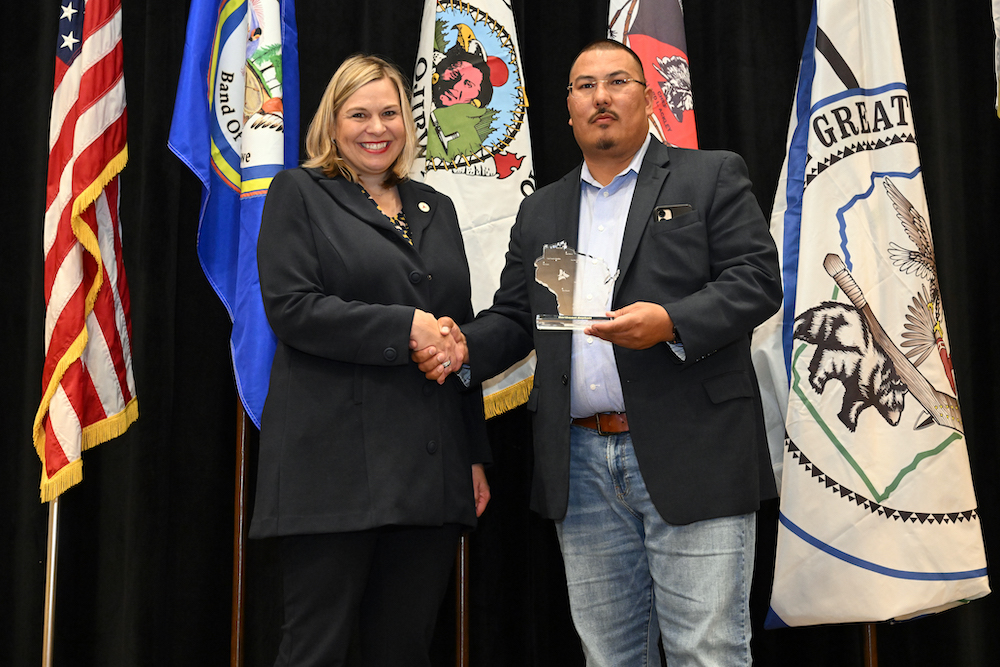
Today, Webster can be found speaking at high school career events, corporate conferences and other community outreach events to expand access to trades and increase Native representation in construction. His work has earned him recognition as one of Madison365’s 33 Most Influential Native American Leaders in Wisconsin and the Tribal Excellence Award from the Wisconsin Department of Transportation.
This conversation has been edited for clarity and brevity.
What drew you to working in professional services, and how did you find your way into this role?
I don't think I ever planned on working in human resources, but I saw a lot of opportunities within the industry. I just saw a gap in leadership that allowed me to continuously move forward. I also noticed when I was building all these mega infrastructure projects alongside tribal communities, there was not a lot of tribal representation. Advancing myself into the HR business allowed me to take a harder look at how we could do more strategic work alongside tribal communities to ensure that we are creating access.
Why do tribes, enterprises, or entrepreneurs hire you? What do they expect from someone in your field?
I support all of our outreach and relationships with community based organizations. I do a lot of strategic workforce development around getting tribal members into the industry and helping them become skilled tradespeople. Folks really depend on me to get involved in the industry.
Can you share one project or client experience you’re especially proud of—what did it involve, and why was it important for the client or community?
I helped launch a re-entry program for incarcerated tribal members. We worked alongside the Wisconsin Department of Transportation. We used a certified pre-apprenticeship program within a minimum security institution just outside of Green Bay and focused on attracting tribal members prior to them being released, so that we could be proactive and get them into the workforce.
What are the biggest challenges you see Native communities facing in your area of expertise?
The biggest challenge is making sure we educate people well ahead of time to understand the career path that exists in registered apprenticeship. The narrative has always been you have to go to college to be successful but that isn't necessarily true. You can leverage a registered apprenticeship program within our organization to be paid while you learn - it's an alternative to going to school. You're learning with your hands, versus learning a curriculum out of a book.
What’s the secret to hiring Native professionals in your industry—what should tribes or entrepreneurs look for?
We don't want everybody. We want people that are reliable to have a good attitude and a willingness to learn. If people can master those soft skills, right, we can teach them how to build. In the job training environment, you're dependent on your co-workers and peers to be able to teach you, and so it's critical that you have a good attitude and are reliable.
Who has been a mentor or influence in your career, and what did you learn from them?
I've had a few mentors throughout my career. A key lesson that I had learned from some of my colleagues was to be intentional about creating boundaries to make sure that you take care of yourself as you get more responsibility. One of the main things is determining where you can say no, especially earlier in your career. Identify places where you can help to develop someone versus shouldering everything.
In Service is a new recurring series that highlights Native executives in professional services — law, banking, accounting, insurance, consulting and related fields — who work with tribes, tribal enterprises and Indigenous entrepreneurs. Know someone who should be featured? Contact [email protected].