- Details
- By Chez Oxendine
- Real Estate
The Menominee Nation broke ground on its first new homes in 25 years this month, while the Navajo Nation has instead repaired more than 100 existing houses over the past year — a split that reflects how tribal nations are making vastly different bets on solving Indian Country's housing crisis.
Increased federal funding allocations in recent years have allowed some nations to finally build new homes after years of stalled development and limited financing. Others are using the dollars for rehabilitation.
Each approach has clear trade-offs. Rehabbing homes cost 25% to 45% less per unit compared to a new construction, according to a National Housing Conference cost analysis. But repairs can be unpredictable, revealing hidden structural issues that strain budgets. New construction offers long‑term durability and modern standards, but requires higher upfront investment, longer timelines and reliable access to contractors and materials.
“It's a big gamble every time,” said Ames Meyers, program manager for the Yee Ha'ólníi Doo Housing Rehabilitation program on the Navajo and Hopi reservations. “You estimate a project, open it up and it can be a can of worms.”
The Yee Ha'ólníi program has repaired more than 100 homes since 2024 with support from the Arizona Department of Housing and partnerships with Navajo chapter governments and local contractors.
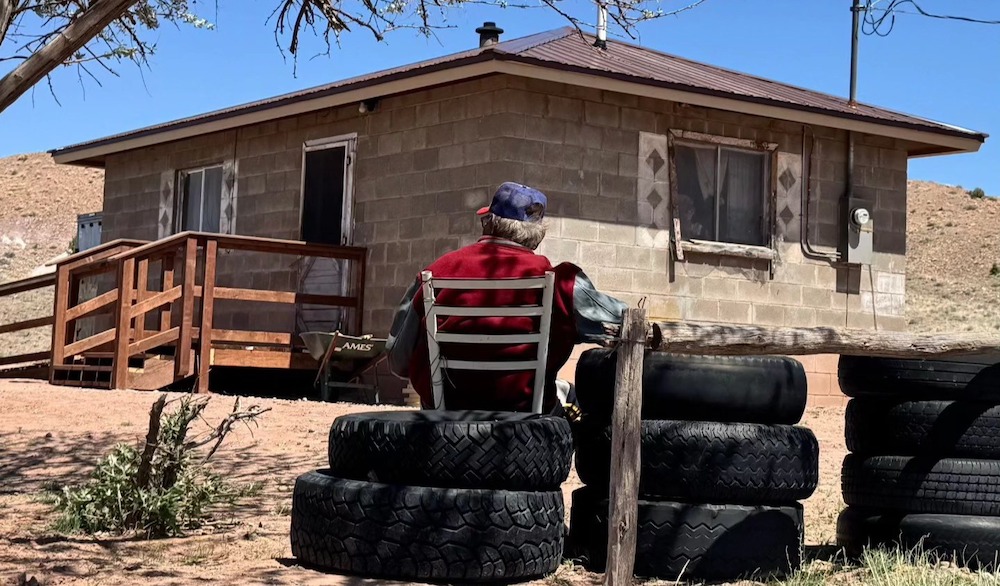
The program’s crews encounter a wide range of construction styles across the reservation. In the western region, many homes were built decades ago with two‑by‑four walls and narrow studs that no longer meet code. In the mid‑reservation communities, some houses were built by stacking rocks into structural walls. Near the mountains, families live in log‑form homes cut from nearby trees and later covered with siding.
Along the eastern edge, some houses were built from railroad ties that were never properly secured. Those walls shift and move over time, creating structural instability that can’t be seen during a basic assessment.
Once walls come down, crews often discover water damage, mold, rotted wood or improvised repairs that require far more work than the original estimate. Some roofs have multiple layers of shingles stacked on top of each other. Others have damaged trusses or long‑term leaks that have compromised ceilings and insulation.
The work is physically demanding and logistically complex, Meyers said. Runs to procure building materials can take three to four hours each way, depending on where crews are working. When a roof is opened and unexpected damage appears, staff rush to haul new materials across the reservation so contractors aren’t left waiting.
Still, the process has kept elders in homes that would otherwise have to be condemned, while operating at lower costs than outright new construction, most of the time, Meyers said.
So far, Yee Ha'ólníi has rehabbed 116 homes, with another three on pace to be completed by the end of the year. The group has spent around $2 million, and its success has garnered another $1 million in grant funding from the Arizona Department of Housing heading into 2026.
Yee Ha'ólníi has stretched those dollars by carefully choosing its projects and through discounts from contractor partners, Meyers said.
"Our contractors are a big part of our success," Meyers said. "Their contributions are close to $300,000 by this point — that's how much they discounted to make these things happen. It really shows they believe in the work we're doing."
The discounts matter because demand remains high.
“We have a lot of veterans. We have a lot of people with health conditions that need help,” Meyers said. “Now we're past a hundred homes, and we're still going, and we'll keep going, and I think we're going to see a lot more success.”
Other nations are choosing new construction despite higher costs. In early December, development crews with the Dream Catcher Housing Initiative began work on the first new houses on the Menominee Indian Reservation in a quarter-century.
The initiative, operating out of Kenesha, Wis., is designed to open new paths to homeownership for Menominee families who have waited decades for new housing stock. The project is a partnership between Wolf River Development Company, the tribe’s non-gaming investment arm, and Mavid Construction, a Native‑owned firm based in Green Bay.
The homes will include three bedrooms, two‑and‑a‑half bathrooms and optional upgrades like garages and decks. They are expected to be completed in early 2026.
“Tribal families encounter many barriers trying to fulfill the dream of homeownership on their reservation lands,” said Crystal Chevalier, chief executive officer of WRDC. “The Dream Catcher Housing Initiative was created to help make those dreams a reality.”