



- Details
- By Brian Edwards and Aminah Syed
- Economic Development
For more than three decades, tribes and Native organizations have relied on a little-known federal grant program to launch Native financial institutions, develop tribal commercial codes and support long-term economic development planning.
Now, that program may be disappearing.
The Administration for Native Americans, an agency within the U.S. Department of Health and Human Services, is moving to replace its Social and Economic Development Strategies (SEDS) and SEDS-Alaska grant programs with a new funding framework known as Economic Advancement Grants for Local Empowerment, or EAGLE, and a separate artificial intelligence program called Artificial Intelligence for American Indians (AI3) Action Institute.
The proposed changes have sparked concern among Native economic development organizations, tribal advocates and current grant recipients who argue that SEDS is one of the few federal funding sources dedicated to foundational economic development in Indian Country.
“This is very much an irreplaceable source of funding for this kind of foundational-level economic development building block work,” said Ian Record, a policy consultant who works with Native-serving nonprofits including the Native CDFI Network and the National Center for American Indian Enterprise Development.
Critics say their concern is not necessarily with the projects ANA has proposed funding under EAGLE — including greenhouses, microgrids, welding programs and other initiatives. Several organizations interviewed by Tribal Business News said those priorities could provide meaningful benefits in Native communities.
Instead, they question why ANA would replace SEDS rather than continue the longstanding program alongside new administration priorities.
“The federal government should be a partner, not telling us exactly where we need to deploy money,” said Chris James, president and CEO of the National Center for American Indian Enterprise Development.
James said SEDS has historically allowed tribes and Native-serving organizations to pursue locally determined economic development projects that may not fit neatly within federally prescribed funding categories.
A shift in direction
In a March 20 Federal Register notice, ANA announced plans to replace SEDS and SEDS-Alaska in fiscal year 2026 with EAGLE and AI3 Action Institute. Existing awards will continue through their current grant periods, according to the notice.
ANA described EAGLE as a strategic framework designed to advance the Trump administration’s priorities while strengthening socio-economic success. ANA intends to fully fund the EAGLE awards for three years. A new notice of funding opportunity (NOFO) will include five funding tracks and $24 million in potential awards:
- Seventh-Generation Greenhouses to increase the quantity and quality of food;
- Microgrids to increase energy reliability;
- Welders to Elders to promote job growth and professional development;
- Tradition in Action, a Native elder program to support intergenerational knowledge; and
- Indigenous Designs to Empower and Advance Self-Determination (IDEAS) to support projects that identify tribal community needs.
The agency also proposed a separate $3.5 million AI3 Action Institute grant intended to help tribes adopt cutting-edge technologies and reduce the AI learning curve. According to a federal grant opportunity forecast, ANA intends to make a single award under the program, creating what would effectively be a national AI resource center for Native communities.
Some Native leaders expressed concern that concentrating AI3 Action Institute funding in a single grant could limit access and flexibility compared with the project-based approach that has historically characterized SEDS, while directing resources to a single organization rather than multiple tribal and Native-serving entities.
What SEDS funds
Supporters of SEDS argue that the program’s value lies in its flexibility and focus on building long-term economic development capacity.
Congress reinforced that mission through the bipartisan Indian Community Economic Enhancement Act of 2020, which authorized ANA to prioritize providing financial assistance for Native CDFIs and directed the agency to give priority to projects involving tribal commercial codes, tribal business structures and tribal master planning.
Native advocates opposing the proposed changes argue those priorities reflect Congress’s intent to support the legal, financial and planning infrastructure tribes need for long-term economic development.
“Institution-building requires more than funding alone,” said Pete Upton, CEO of the Native CDFI Network. Upton said SEDS has historically funded planning, staffing and organizational capacity-building that Native CDFIs rely on before they qualify for Treasury certification and capitalization.
Current grants illustrate the range of activities supported through SEDS. Recent awards include a $900,000 award to NACDC Financial Services, a Native CDFI, to develop a pipeline of Native finance professionals; a $794,651 grant to the National Center for American Indian Enterprise Development to strengthen tribal procurement systems and Native business participation; and an $899,275 award to Tanka Fund to help Native buffalo ranchers access capital, strengthen business operations and build long-term economic sustainability.
One recent example is NACDC Financial Services' Inokesquetee Saki, or Yellowbird, Workforce Development and Fellowship Program, named in honor of the late Blackfeet leader and Native banking pioneer Eloise Cobell.
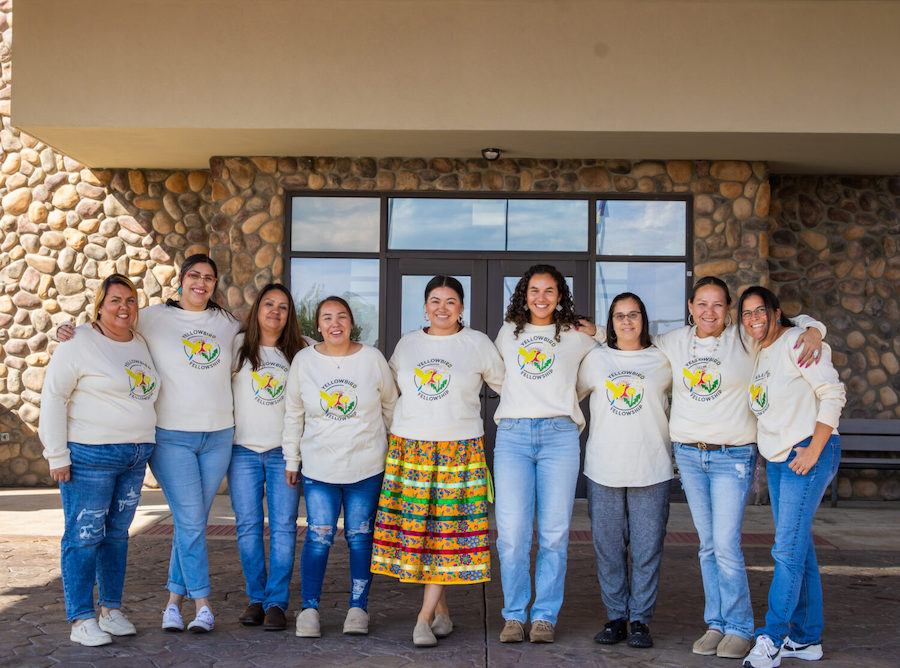 Yellowbird Fellows pose at a cohort gathering this year in Browning, Montana (Photo: NACDC Financial Services).
The Browning, Mont.-based Native CDFI received a three-year $900,000 SEDS award to expand a workforce initiative designed to create a pipeline of Native finance professionals for Native CDFIs and other financial institutions serving Indian Country.
The program grew out of a regional assessment that found Native CDFIs often struggle to recruit experienced lending and financial professionals because most who work in the industry are relatively young.
“The SEDS grant helped us sustain the fellowship program for another three years and gave us breathing room to figure out how to make it sustainable long term,” said Angie Main, executive director of NACDC Financial Services.
Dave Tovey, executive director of Nixyáawi Community Financial Services on the Confederated Tribes of the Umatilla Indian Reservation, said SEDS grants have supported tribal economic development efforts there for decades.
One of the tribe's earliest SEDS grants funded staff for the tribe's Department of Economic and Community Development, which later helped develop projects including the Tamástslikt Cultural Institute, the New Nation Land Project and Wildhorse Resort & Casino. More recently, a SEDS grant helped support staffing, feasibility work and initial operating expenses for the Txtáyma Food Truck Park on the Umatilla reservation.
“Few other grants allow staffing costs,” Tovey said. “For small organizations with limited expertise, being able to hire talented individuals is the magic sauce to make projects move forward.”
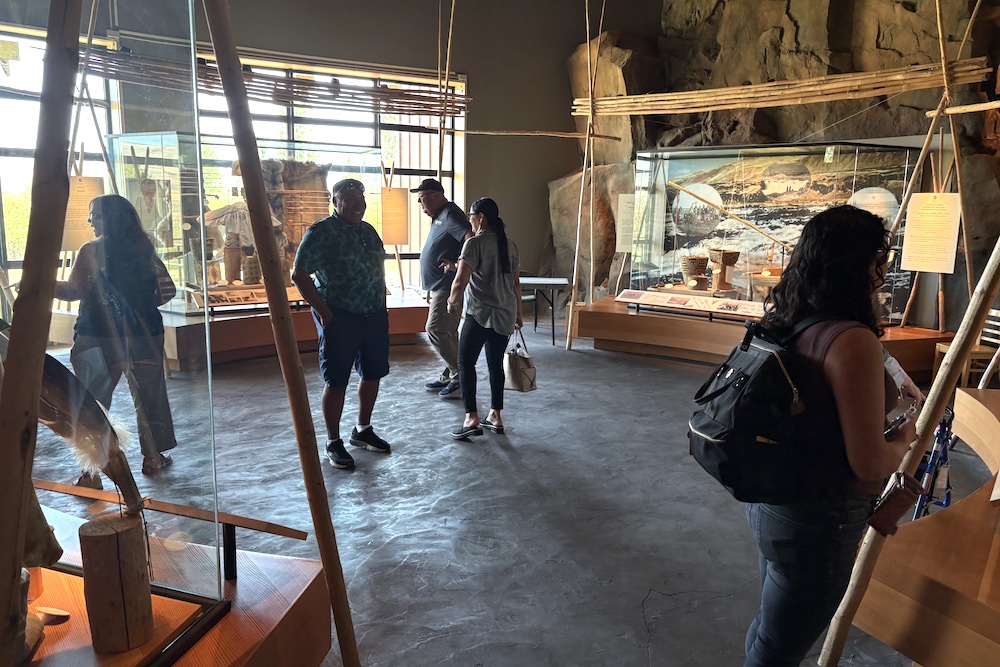
For SEDS supporters, the breadth of those projects reflects what has long distinguished SEDS from many federal grant programs: Tribes and Native-serving organizations can propose projects tailored to local economic development priorities rather than fit them into narrowly prescribed funding categories.
Supporters of the existing program worry that flexibility could be diminished under ANA’s proposed replacement framework. While EAGLE includes a self-determination category known as IDEAs, much of the program’s $24 million funding pool would be organized around more specific initiatives such as greenhouses, microgrids, welding workforce development and elder mentorship programs.
“It's not necessarily that these new programs are problematic; it's (that they come) at the expense of the existing programs,” James said.
Critics argue that some of the activities Congress specifically prioritized in 2020 — including tribal commercial code development, Native CDFI growth and economic master planning — are not clearly reflected in the proposed structure.
Consultation concerns
Questions also remain about how the new programs were developed.
In a formal comment letter submitted to ANA on April 17, the National Center argued that the consultation process was insufficient for changes of the magnitude the agency has proposed. The nonprofit cited ANA’s own consultation report, which showed participation from just six tribal leaders representing five tribal nations, approximately 20 tribal government staff and just two written comments.
The National Center also argued that tribes were not specifically consulted on replacing SEDS and SEDS-Alaska with the EAGLE and AI3 Action Institute programs.
A “Dear Tribal Leader” letter distributed ahead of the August 2025 consultation framed the discussion around tribal economic development priorities and described SEDS as the agency’s primary economic development funding program. The materials highlighted congressionally authorized priorities including Native CDFI development, tribal commercial codes, tribal business structures and tribal master planning, but did not mention eliminating SEDS or replacing it with EAGLE and AI3 Action Institute.
According to ANA’s consultation materials, tribal leaders were asked broadly about economic development priorities, including infrastructure, workforce development, private-sector partnerships and other community needs.
“The fact is that the new programs were defined out of thin air without really any involvement or meaningful consultation,” according to Record.
Reauthorization effort
The proposed elimination of SEDS and SEDS-Alaska has prompted a separate effort on Capitol Hill.
In a May 5 letter to congressional leaders, nine national and regional Native organizations urged Congress to immediately reauthorize SEDS and SEDS-Alaska for five years and direct ANA to preserve the programs as core funding initiatives.
The organizations argued that SEDS remains one of the federal government’s most flexible and effective economic development tools because tribes determine their own priorities rather than fitting projects into narrowly defined categories.
Sen. Patty Murray, D-Wash., said she is "deeply concerned" by the proposal, arguing that Native communities rely on SEDS grants to fund economic development projects and criticizing the Trump administration for moving forward without meaningful tribal consultation.
"Tribes deserve to have a seat at the table from the beginning—in all conversations—not just as an afterthought," Murray said in a statement to Tribal Business News.
Discussions about preserving the program have already begun on Capitol Hill.
According to a person familiar with the discussions who requested anonymity because they were not authorized to speak publicly, conversations with congressional committee staff regarding reauthorization and continued funding for SEDS and SEDS-Alaska are in the preliminary stages. However, whether Congress acts remains uncertain.
Meanwhile, ANA appears to be moving forward, although neither funding opportunity has opened. Grants.gov continues to list both EAGLE and AI3 as forecast opportunities. AI3 retains an estimated application deadline of July 21 despite the notice of funding opportunity not yet being published, while EAGLE's estimated release date was pushed from June 3 to July 8.
ANA staff declined to answer questions from Tribal Business News about the consultation process, the rationale for the proposed EAGLE funding categories and the delayed release of the funding opportunities. The agency said it could not comment because the proposed grant programs remain under federal review and said additional details will be released when the notices of funding opportunity are published.
Whether Congress intervenes or ANA proceeds with the new funding structure, the outcome could determine whether one of Indian Country's longest-running economic development programs survives in its current form.
Editor's Note: This story has been updated with a comment from Sen. Patty Murray, D-Wash.