- Details
- By Chez Oxendine
- Energy | Environment
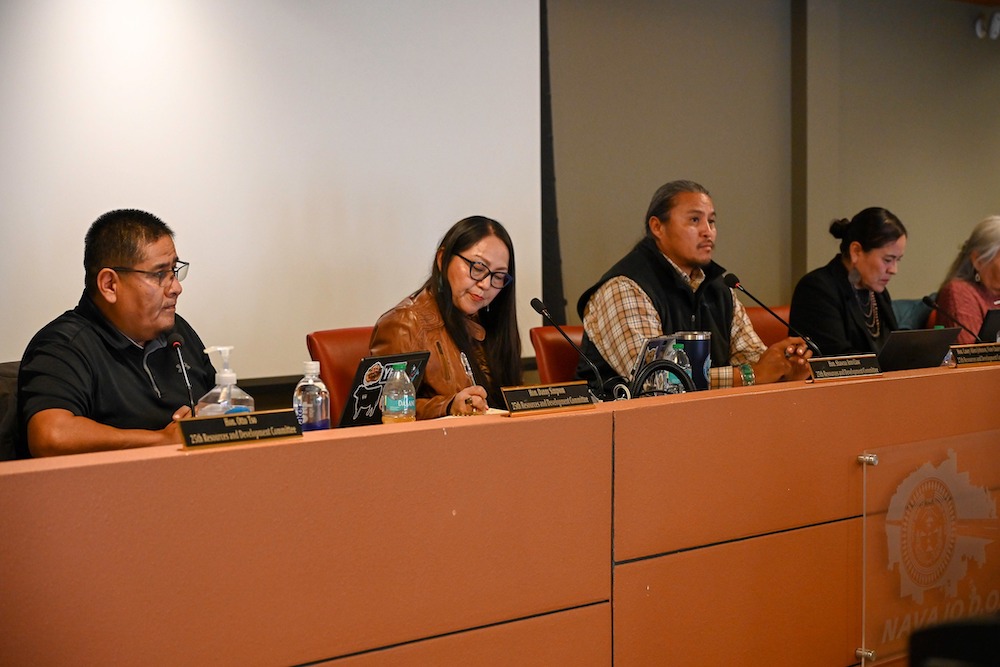
The Navajo Nation Resources and Development Committee will move forward with plans for a standalone energy office, a move intended to centralize authority over energy projects and provide a single point of contact for outside agencies.
The committee announced the decision following a Nov. 24 committee meeting where members reviewed different ideas for building the office. The options, developed by consultant Red Streak LLC, included a new department woven tightly into existing departments to centralize and coordinate their energy efforts, as well as a more independent office meant to eventually become its own enterprise.
Committee members settled on the latter model, one that would establish the energy office as an independent entity. The plan calls for the office to oversee operations, budgeting, policy development, risk management, community engagement and regulatory processes. Members said the model would reduce conflicts between departments and streamline communication.
“The Navajo Energy Office is not just an administrative structure. It is an investment in our nation’s future,” Resources and Development Committee Chair Brenda Jesus said during the meeting. “By advancing a clear and independent plan of operation, we position the Navajo people to guide our own energy development, protect our lands and ensure that every project delivers real benefits to our communities.”
Among the issues under review are how to select an energy director and how to define the office’s authority relative to existing departments. Fellows from the US Department of Energy, which assisted in the draft’s development, proposed a selection committee with representation from all three branches of government and technical experts.
Committee members emphasized the need for clarity across departments and enterprises. Vice Chair Casey Allen Johnson requested defined distinctions between the Minerals Department, the Division of Natural Resources, and the Energy Office. He noted that outside agencies struggle to identify a single Navajo Nation point of contact—an issue he said must be resolved to streamline project development and avoid conflicting directives.
Lisa Woods, owner of Red Streak LLC, told the committee the independent model uses a step-by-step approach beginning with the creation of the Energy Office, building internal capacity and eventually transitioning into a full Navajo enterprise.
“We indicated that there should be a phased out approach to maximize the opportunities, maximize the benefits, rather than doing it all at once,” Woods said. “That would create the biggest impact.”
Budget projections for the office’s initial implementation range from $1.1 million to $1.5 million. While early revenue generation is not expected, delegates urged planners to incorporate sustainability measures and ensure timely distribution of funds to chapters.
The committee expressed unified support for the proposal and agreed to create an independent Energy Director selection panel. Draft documents will be distributed to Navajo enterprises including Navajo Tribal Utility Authority, Navajo Nation Oil and Gas and Navajo Transitional Energy Company, with comments due in December. A revised draft is scheduled to return to the committee in January 2026.
The push for a centralized Energy Office comes as the Navajo Nation weighs its energy future. Coal has long been a cornerstone of the Nation’s economy, but closures of major facilities such as the Navajo Generating Station and Kayenta Mine have reduced revenues and employment, per prior Tribal Business News reports.
At the same time, President Buu Nygren has supported efforts by Navajo Transitional Energy Company to expand coal exports and maintain operations at the Four Corners Power Plant, while slowing or resisting large‑scale solar projects, according to reporting by the New York Times.
Renewable energy advocates argue that solar and wind could provide long‑term revenue and help address energy poverty. About 13,000 Navajo households, roughly one in four, still lack electricity, according to the Navajo Tribal Utility Authority.
“We wanted a process that was streamlined to have minimal input from leadership but more or less the energy office taking the helm on decision making,” Jesus said. “We want a framework that is unbiased - that can bring us forward.”