- Details
- By Chez Oxendine
- Gaming
A federal agency has proposed a new rule that could loosen its regulation of prediction markets — and undercut tribal and state governments’ challenges to those markets’ operations.
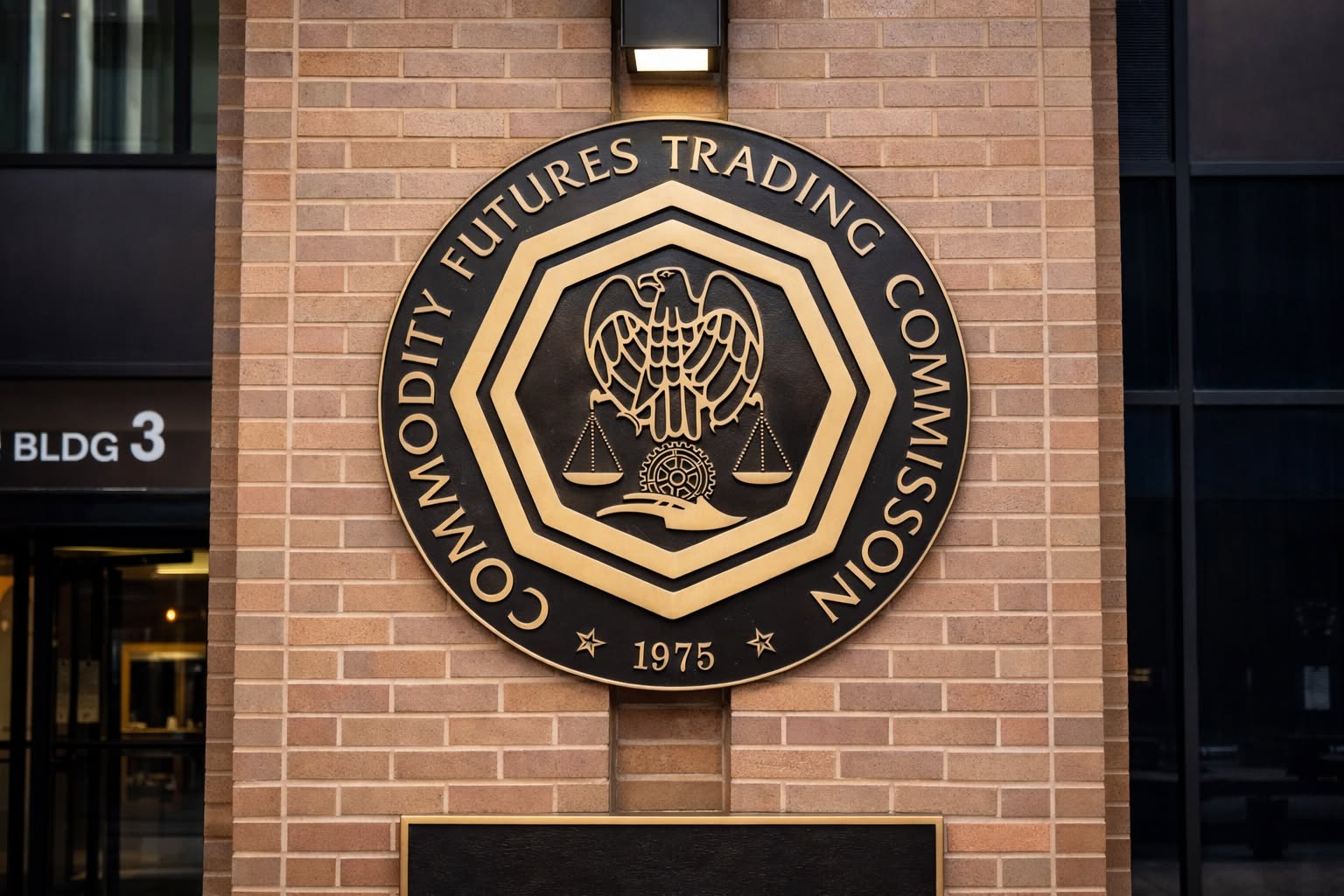
The proposed rule, published June 12 in the Federal Register, would revise how the Commodity Futures Trading Commission (CFTC) evaluates event contracts. These contracts, traded on prediction markets, pay contract holders based on the outcome of a given event, such as election, a sports game, or the weather on a particular day.
The CFTC’s proposed revisions would narrow the agency’s own authority to disallow particular contracts. The Commodity Exchange Act gives the CFTC special authority to block contracts involving gaming, war, terrorism, or unlawful activity, but the proposal would narrow how that authority applies.
Under the new rules, the commission — currently led by Chairman Michael Selig — would serve primarily as a monitor stepping in only to curb “contracts against the public interest,” rather than guiding or regulating the market more broadly.
At the same time, the rule would reaffirm the CFTC’s exclusive jurisdiction over swaps and futures, including event contracts, under the Commodity Exchange Act. That jurisdiction, the agency argues, preempts state gambling laws and other forms of nonfederal regulation that might otherwise apply to prediction markets.
The rule’s preemption language has drawn particular attention from tribal and state governments. The proposal states that the CEA “preempts the application of state law” and that Congress granted the CFTC “exclusive jurisdiction” to regulate futures, options, and swaps on federally regulated exchanges. The agency cites legislative history describing federal preemption as “complete.”
The proposal includes a section on tribal consultation. Legal experts and policymakers say it does not adequately address tribal sovereignty or the potential effects on tribal gaming operations.
Danielle Finn, program director of the Indian Nations Gaming and Governance Program at the University of Nevada, Las Vegas, said the policy doesn’t engage seriously with tribal sovereignty.
“The CFTC spends considerable effort in this rule arguing that federal jurisdiction preempts state gambling laws. But tribal sovereignty isn't the same as state law,” Finn said. “Tribes are separate sovereigns, and this rule never seriously grapples with that distinction. That's a significant omission.”
Finn said the rule’s consultation section “reads more like a checkbox than genuine engagement,” despite the proposal’s potential impact on tribal economies.
“For many tribal nations, gaming revenue funds schools, hospitals, and housing,” she said. “If federal prediction market regulation begins encroaching on what counts as gaming and who gets to regulate it, that's not an abstract legal question. It has real consequences for tribal economies and self-governance.”
The proposal arrives as prediction markets have grown rapidly in size and visibility. According to the CFTC’s rule proposal, trading volume on registered platforms exceeded $25 billion in 2025. The agency writes that the markets provide useful information for price discovery and forecasting, and that clearer rules are needed to address the expansion of contracts tied to politics, sports, and cultural events.
The agency also aims to clarify what it means by “gaming” contracts. Under the proposal, the definition would apply only to contracts that resolve based on the outcome of a game. Contracts tied to attendance figures, television ratings, or other metrics adjacent to a sporting event would generally fall outside the agency’s gaming authority to block them.
Rob Schwartz, former CFTC general counsel and now a partner at Morgan Lewis & Bockius LLP, said the definition signals a narrower approach to sports markets than many expected.
“The proposed rule does not limit sports markets very much. It's really just around the edges that the CFTC is proposing to contain it,” Schwartz said. “It indicates that it will look more favorably upon prediction markets on aggregate results, full seasons, and game scores, and less so on individual occurrences under one person's control.”
Schwartz said the agency is also proposing to constrain its own authority to review and disapprove event contracts.
“It's clearly going to allow this kind of activity to go on, which we already suspected because they haven't been doing anything to constrain it. It also emphasizes that state gaming authorities can't regulate it either,” Schwartz told Tribal Business News. “I think it's almost a libertarian attitude. The agency’s policy is that (event contracts) will rise or fall depending on whether the market wants (them).”
The proposal follows months of criticism from tribal gaming organizations and some members of Congress. During an April House Agriculture Committee hearing, lawmakers and tribal leaders argued that sports-related prediction markets resemble sports wagering and warned that treating them as federally regulated financial products could undermine tribal gaming compacts and tribal sovereignty.
U.S. Sen. Catherine Cortez Masto (D-Nev.) said the proposal undermines both state and tribal authority over sports wagering and casino-style gaming.
“It's been very clear to me that the current chair of the CFTC under Trump's administration is undermining and, more importantly, usurping not just tribal authority but states' rights in this space of prediction markets,” Cortez Masto said. “I think the states have a role and tribes have a role to regulate sports wagering and casino-style gaming, and that should never be taken away or federally preempted.”
Cortez Masto, a member of the Senate Committee on Indian Affairs, said prediction markets function as sports wagering and lack the consumer protections, addiction safeguards, and licensing requirements that states and tribes have developed over decades.
“Prediction markets are sports wagering. You just have to look at the activity that happens. Over 90 percent of what happens on these markets is sports wagering,” she said. “To say that they're anything different is really a lie.”
Schwartz said the matter is likely headed for a messy battle before the U.S. Supreme Court, with consequences either for the markets themselves or for governments seeking to regulate them.
“I have no idea what the Supreme Court is going to say about this, but either way I think there's going to be some aftermath,” Schwartz said. “People like the product.”
The CFTC did not respond to multiple requests for comment from Tribal Business News by press time. A request for comment from the Indian Gaming Association also had not been answered by press time.
The CFTC is accepting public comments on the proposal through July 27.