- Details
- By Chez Oxendine
- Sovereignty
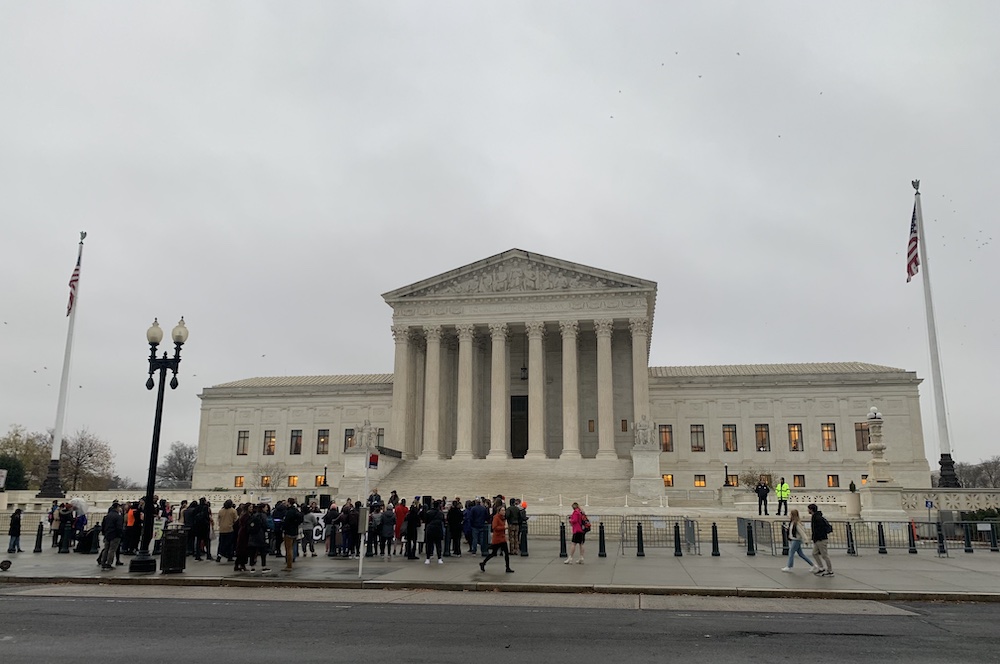
The U.S. Supreme Court on Monday declined to hear the Chinook Indian Nation’s petition on whether federal courts can recognize Indian tribes.
The denial leaves in place a Ninth Circuit ruling that recognition is a political question reserved for Congress and the executive branch.
The order, issued March 23, denied review in Chinook Indian Nation v. Burgum without comment. The tribe's petition asked the Court to resolve what the Chinook described as a long‑standing conflict among federal courts over whether the Federally Recognized Indian Tribe List Act of 1994 allows recognition “by a decision of a United States court.”
The Ninth Circuit ruled in June 2025 that the List Act’s findings do not create judicial power to recognize tribes and affirmed dismissal of the Chinook’s suit for lack of subject‑matter jurisdiction. The district court had reached the same conclusion, holding that recognition remains a non‑justiciable political question.
In their petition, the Chinook said federal courts have issued conflicting decisions for decades, with some courts citing the List Act to acknowledge judicial authority and others treating recognition as exclusively political. The tribe argued that the Ninth Circuit’s approach “ignores the only statement Congress has ever made” on the issue and undermines the Interior Department’s own recognition framework.
The Chinook also pointed to more than a century of federal dealings — including treaty negotiations in 1851, trust‑fund payments for land takings, Indian Claims Commission awards, and repeated government‑to‑government consultations — as evidence that the United States has long treated them as a tribal government.
The tribe said the case presented a straightforward legal question because it was dismissed at the pleading stage.
The Supreme Court’s denial ends the Chinook’s current effort to secure recognition through the courts. With the Ninth Circuit decision intact, the tribe’s path to federal acknowledgment remains limited to Congress or the administrative process at the Department of the Interior.
The tribe’s chairman, Tony Johnson, said in a statement that the denial prolongs the tribe’s decades-long effort to secure federal recognition and access to services, adding that the Chinook will continue to press their case through other channels. “It is not an end, but a continuation of our efforts.”