- Details
- By Chez Oxendine
- Economic Development
The Navajo Nation is set to receive about $277 million in Broadband Equity, Access and Deployment (BEAD) funding from three states, a major investment aimed at closing long-standing gaps in high-speed internet access across the reservation.
New Mexico awarded the tribe $111 million, the largest single subgrant in the state’s $382 million BEAD allocation. Arizona awarded $140 million and Utah added $26 million. Together, combined with matching funds, the awards support the Navajo Nation’s $373 million broadband plan, which aims to connect thousands of homes with infrastructure the government will own.
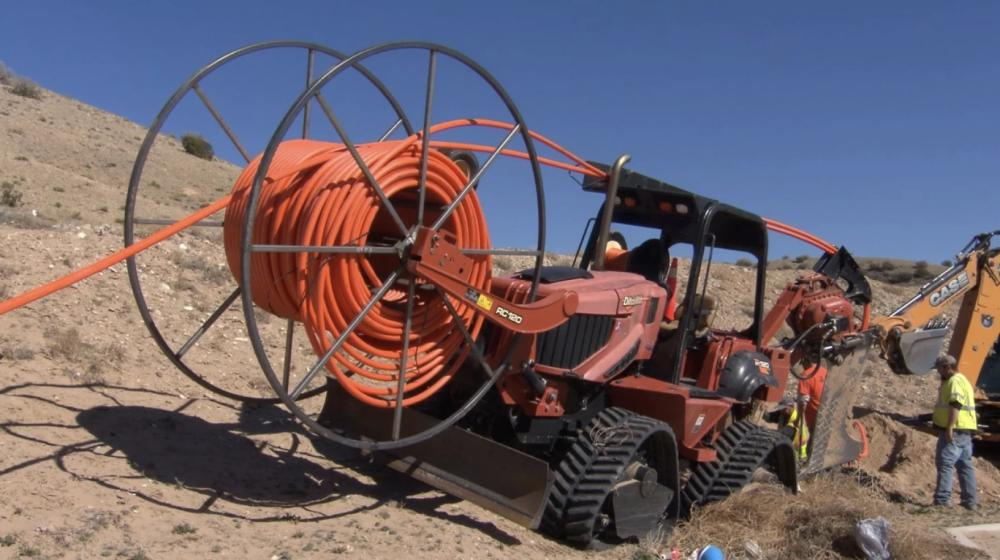
The Navajo Nation Broadband Office, led by Executive Director Sonia Nez, said Broadband Plan 2.0 relies on blending fiber, wireless, and satellite technologies to stretch federal dollars across a land base larger than West Virginia. The approach, developed through Connect Diné outreach and multiyear engineering work, is designed to reach more households at lower cost.
More than 31,000 unserved and underserved households across the reservation are eligible for BEAD‑funded service, according to Navajo Nation Broadband Office planning documents. That includes more than 19,000 fixed wireless locations, more than 8,000 fiber‑to‑the‑home locations and more than 3,000 satellite‑served homes.
New Mexico’s award alone will support connections for more than 11,000 households. With an average household size of five, nearly 55,000 Navajo citizens stand to benefit from new high‑speed service.
Nez said Broadband Plan 2.0 is designed to deliver universal connectivity across the Navajo Nation by combining fiber, wireless and satellite infrastructure, including expanded 5G deployment and new tower construction.
“BEAD is a means to an end,” Nez said.
The awards were highlighted during New Mexico’s Broadband Day on Feb. 12, where Resources and Development Committee Vice Chair Casey Allen Johnson joined officials from the Navajo Nation Broadband Office and the New Mexico Office of Broadband Access and Expansion.
Johnson said the funding represents the largest broadband infrastructure investment ever directed to the Navajo Nation and will expand high-speed internet access, including in some of the reservation’s most remote communities.
The Navajo Nation Broadband Office coordinated with New Mexico, Arizona, and Utah to secure awards that will allow the tribe to build a unified network across state lines. The project will use a mix of fiber, licensed fixed wireless, and low-Earth-orbit satellite technologies to reach remote communities, rather than relying solely on fiber.
“Fiber, wireless, and satellite work best together — they’re not rivals, they’re teammates,” Nez said.
The BEAD program was created in 2021 under the Infrastructure Investment and Jobs Act. The Biden administration designed the program around a fiber-first approach, affordability requirements and labor standards intended to ensure long-term service quality. States were required to consult with tribal nations, incorporate tribal broadband plans into their scoring and prioritize unserved and underserved areas.
With an initial allocation of $42.5 billion, BEAD represents the largest federal broadband investment in U.S. history. Tribes spent years preparing engineering plans and applications while states completed mapping and planning requirements.
The Trump administration has since moved to revise the program’s regulatory framework. While the core funding allocations remain in place, the administration has proposed easing fiber first expectations, reducing affordability obligations for providers, and streamlining environmental and labor compliance.
Under that framework, the Navajo Nation worked with the three states to build out a more cost-effective plan than routing fiber throughout the entire reservation, according to the broadband plan. New Mexico officials praised the adaptation as part of their reasoning for the tribe’s award - the largest such award from the state’s BEAD funding deployment.
“Through their broadband office and their collaboration with industry, the mix of technology they are using really mirrors what we are doing as a state and what the federal government envisions,” said Jeffrey Lopez, executive director of the New Mexico Office of Broadband Access and Expansion, in a statement. “It is a very good project that meets the moment.”