- Details
- By Chez Oxendine
- Food | Agriculture
Federal lawmakers from Washington have introduced legislation to transfer the Clear Creek Hatchery infrastructure to the Nisqually Indian Tribe, returning federally owned facilities tied to the tribe’s salmon recovery work.
Rep. Marilyn Strickland, (D‑Wash.), introduced the Nisqually Clear Creek Hatchery Land Transfer Act of 2026 (H.R. 7515) in the House Feb. 11.
Sens. Maria Cantwell, (D‑Wash.), and Patty Murray, (D‑Wash.), introduced the Senate version of the bill (S. 4014) on March 5. The bill would require the Interior Department to convey ownership of the hatchery infrastructure to the tribe within 90 days of enactment.
The legislation directs the Interior Department to transfer “all right, title, and interest” in the hatchery infrastructure to the tribe at no cost, subject to valid existing rights.
In a statement, Strickland said the transfer restores ownership of a site central to the tribe’s salmon recovery work and treaty‑reserved fishing rights.
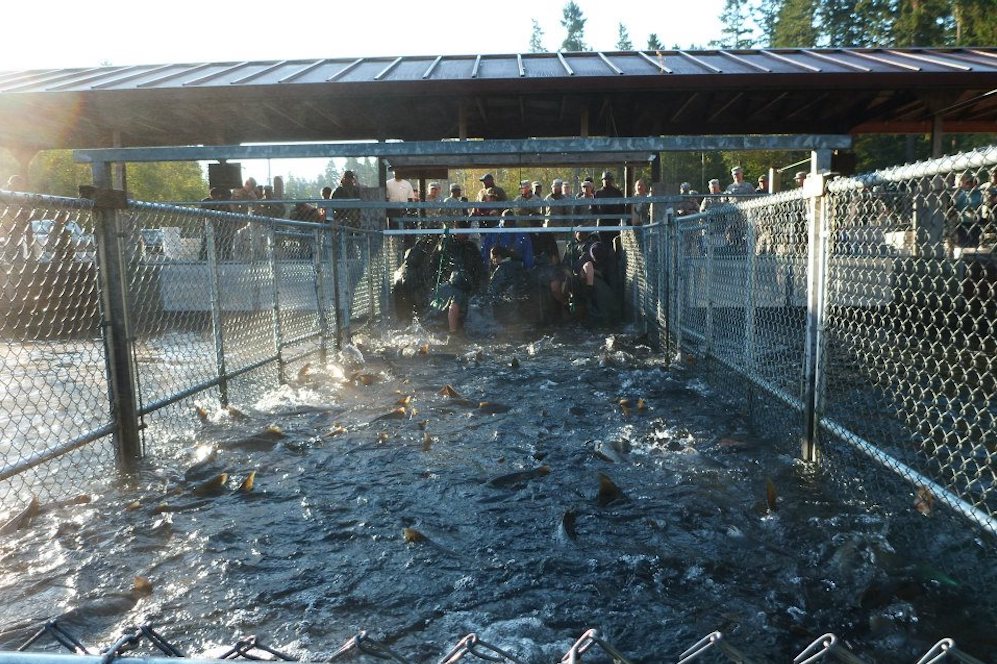
The Clear Creek Hatchery supports Chinook and coho production in the Nisqually River watershed.
Tribal leaders have long argued that returning ownership would align management with the tribe’s fisheries program and cultural stewardship of the river.
Nisqually Indian Tribe Chairman Ken Choke said the Clear Creek Hatchery is critical to the tribe’s fishers program and noted he once worked there helping protect future salmon runs.
Cantwell said the transfer reflects the federal government’s responsibility to support salmon restoration and uphold treaty commitments.
“This is about putting the tools for salmon recovery back in the hands of the people who have cared for these waters since time immemorial,” she said.
The bill defines the transferred assets as “covered infrastructure,” including asphalt ponds, springs, wells, raceways, pollution‑abatement ponds, an incubation room, a fish ladder, and upper and lower forebays. It also includes pipes, electrical and communications conduits, fencing and roads associated with the hatchery facilities.
If enacted, the transfer would return management authority to the tribe and mark a significant federal acknowledgment of its role in salmon recovery and watershed stewardship, per the press release.