- Details
- By Brian Edwards
- Health Care
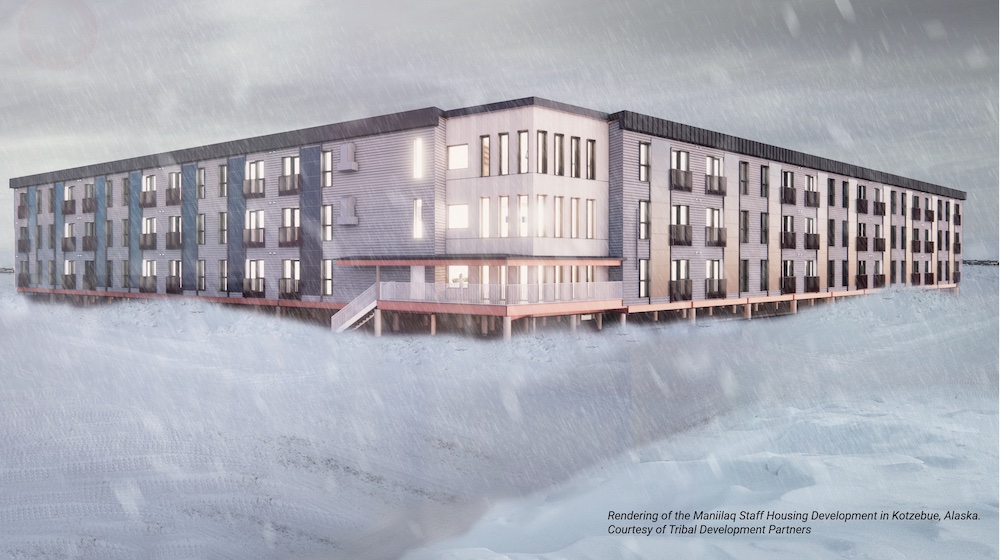
Tribal Development Partners LLC said it closed financing on a $132 million workforce housing project in Kotzebue, Alaska, aimed at stabilizing health care staffing across 12 Native communities in the Northwest Arctic region.
The development will add multi-unit housing adjacent to the regional campus operated by the Maniilaq Association, a tribally run nonprofit serving an area roughly the size of Indiana. Housing shortages have limited the organization’s ability to recruit and retain medical staff.
The project is financed through $132 million in tax-exempt revenue bonds issued by the Public Finance Authority and rated A- by Fitch Ratings, with a stable outlook. Debt service will be paid through lease payments backed by Maniilaq’s revenues, including federal Section 105(l) lease reimbursements.
Fitch cited Maniilaq’s role as an essential regional provider, stable federal funding through the Indian Health Service compact, and a strong financial profile, including $167.7 million in cash, in assigning the rating.
The transaction reflects increased use of capital markets to finance tribal health infrastructure, as lenders increasingly underwrite projects against future Section 105(l) lease revenue, which has grown to more than $600 million annually, according to new research from the Center for Indian Country Development at the Federal Reserve Bank of Minneapolis.
In September, the San Carlos Apache Healthcare Corporation issued $46.25 million in A- rated bonds to fund a 100-bed nursing facility in Arizona, supported by system revenues, with the facility expected to become eligible for Section 105(l) reimbursements once operational, per prior Tribal Business News reporting.
Both projects address infrastructure constraints — housing and long-term care — that directly affect access to services in Native communities.
Kim Reitmeier, president of Anchorage-based Tribal Development Partners, said in a statement workforce housing is critical to sustaining essential services in remote regions, describing the project as an example of how “strategic financing” and partnerships can help tribal organizations advance infrastructure.
Maniilaq Association President Tim Gilbert said the organization pursued the project to fully leverage its 105(l) funding, calling the partnership with Tribal Development Partners a way to turn long-standing capital needs into “reality.”
Maniilaq Association was among the tribal organizations involved in federal court cases that clarified Section 105(l) payments, a shift that now supports projects like the Kotzebue development.